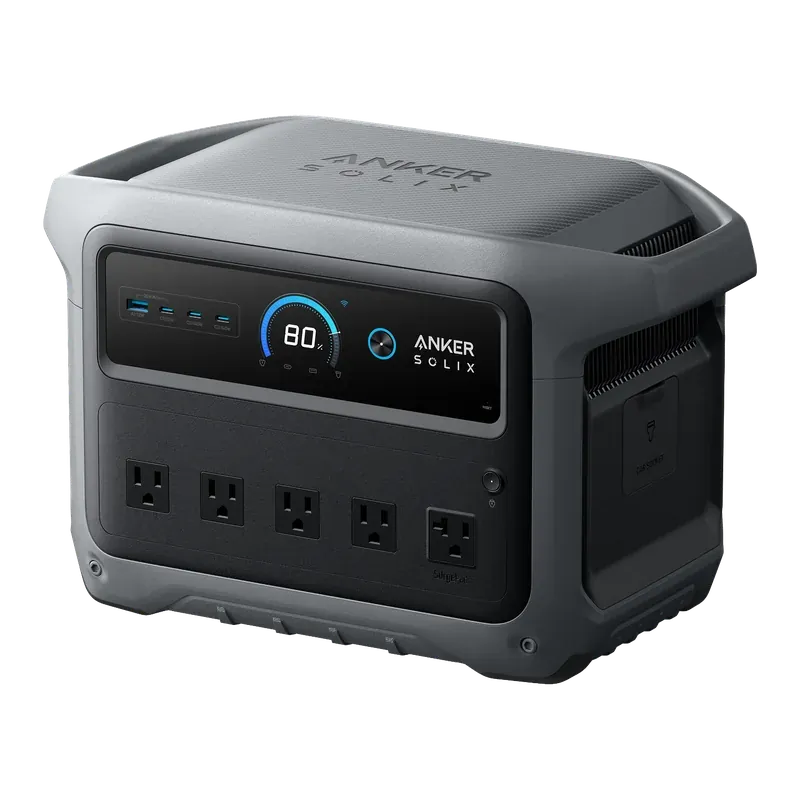
Anker SOLIX C1000 Gen 2
- Capacity
- 1,024 Wh
- Output
- 2,000 W output
- Weight
- 24.9 lb
- Battery
- LiFePO4
We may earn a commission if you buy through these links. It doesn’t change your price. How we make money

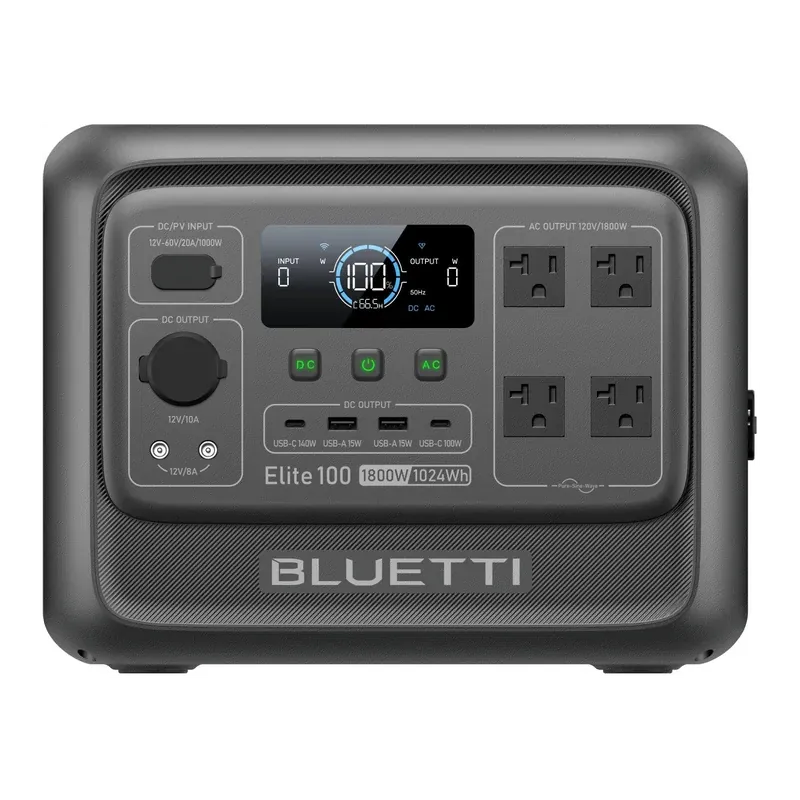
The Bluetti Elite 100 V2 is a 2025 power station that packs 1,024 Wh and 1,800 W into a 25 lb box, a lighter alternative to the older AC180. It has four wall outlets, two USB-C ports and a car port, and it refills from the wall in about 70 minutes. It suits a CPAP machine, a fridge during a short outage or weekend camping, but it cannot take extra batteries.
We may earn a commission if you buy through these links. It doesn’t change your price. How we make money
Expect about three nights of CPAP use with the heated humidifier on (about 26 hours), or about 15 nights with it off. A full-size fridge runs about 19 hours, and an 8,000 BTU window AC about 2.5 hours if it cycles half the time. It cannot run an 1,875 W hair dryer at full heat, because that is above its 1,800 W output.
One device at a time, from a full charge. Devices that cycle on and off (fridges, freezers, heaters, pumps) use their average draw.
Battery Wh × 0.85 ÷ the device’s average watts. “Can’t run it” means the device needs more than 1,800 W or a start-up surge above 3,600 W. Try your own mix in the calculator.
A full answer for each device on the BLUETTI Elite 100 V2: hours, start-up surge and other units to consider.
If you plan to carry your power station, look at this one first. At 25 lb in a 12.6 x 8.5 x 9.8 in case, it has the smallest case of any 1,000 Wh class station on this site. It still has a 3,600 W surge rating, tied for the highest in that group. It suits campers, renters who need to store it in a closet, and CPAP users who want several nights from one charge.
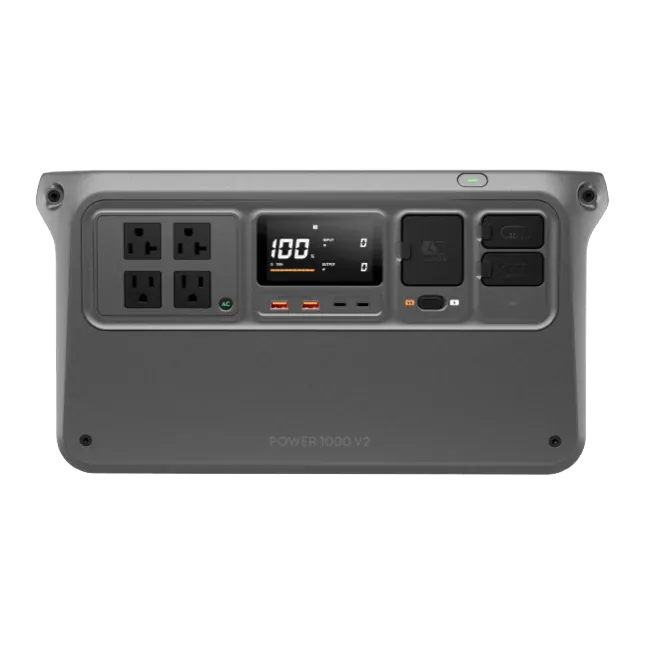
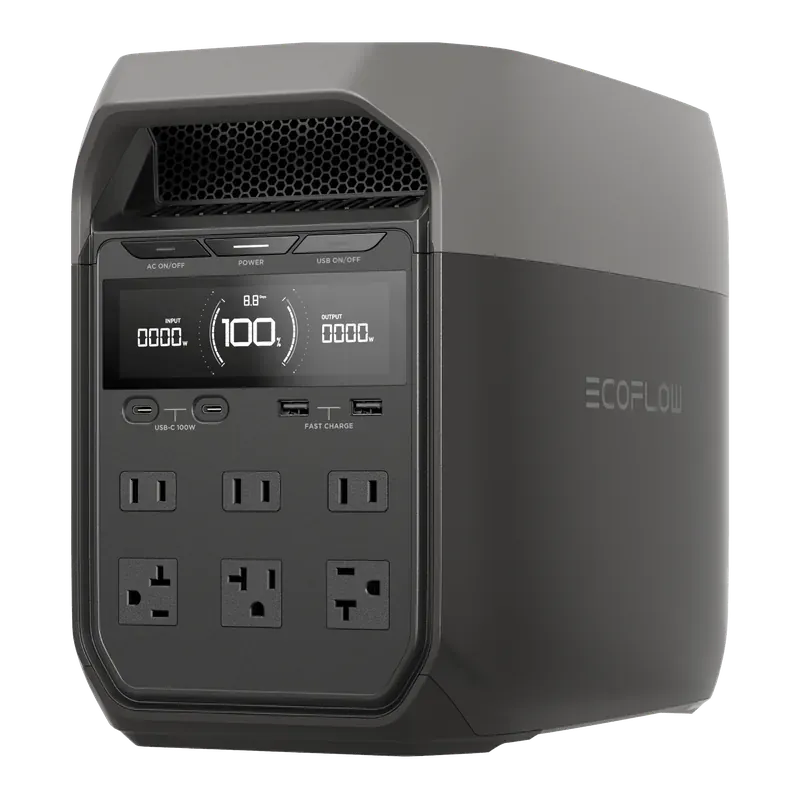
Bluetti’s older AC180 is the obvious comparison. The Elite 100 V2 gives up 128 Wh of capacity but weighs 10.3 lb less, raises surge from 2,700 W to 3,600 W, switches to battery in 10 ms instead of 20, and takes up to 1,000 W of solar against 500 W. Next to the DELTA 3 Plus, it matches capacity, output, surge and solar, with four AC outlets instead of six.
What it cannot do is grow. There is no extra battery option, so one charge is about a day of fridge power, and then you need the wall or the sun. Reaching the full 1,000 W of solar takes several panels. With a single 200 W panel, a full refill needs more than five hours of ideal sun. Power Lifting runs heating devices such as kettles up to 2,700 W, but treat it as a fallback, not extra output.

1,024 Wh · 1,800 W output · 27.6 lb
Pick the DELTA 3 Plus if you want to add batteries later. It expands to 5,000 Wh, about four days of fridge power, and has six AC outlets and a quicker 56-minute wall recharge. It weighs 2.6 lb more and usually costs more.
1,024 Wh · 2,000 W output · 24.9 lb
Pick the Anker if you need 2,000 W for a hair dryer or want the fastest wall recharge, about 49 minutes with UltraFast mode on. Its surge is lower at 3,000 W, and it cannot take extra batteries either.
| Spec | BLUETTI Elite 100 V2 |
|---|---|
| Capacity | 1,024 Wh |
| AC output (continuous) | 1,800 W |
| Surge | 3,600 W |
| Boost mode (heaters, kettles) | 2,700 W |
| Battery type | LiFePO4 |
| Cycle life (rated) | 4,000 (to 80%) |
| Weight | 25 lb |
| Wall charge time | 1 h 10 min (0–100% with TurboBoost; 80% in 45 min) |
| Max solar input | 1,000 W |
| AC outlets | 4 |
| USB-C ports (max) | 2 (140 W) |
| USB-A ports | 2 |
| 12V / car port | Yes (3 DC ports) |
| Expandable | No |
| UPS switch-over | 10 ms |
| App control | Yes |
| Size | 12.6 x 8.5 x 9.8 in |
| Released | 2025 |
| Typical price | $380–$500 |
Specs come from the maker’s own pages, checked . Runtimes use our own watt-hour math. How we pick

We may earn a commission if you buy through these links. It doesn’t change your price. How we make money

We may earn a commission if you buy through these links. It doesn’t change your price. How we make money

We may earn a commission if you buy through these links. It doesn’t change your price. How we make money
On the BLUETTI AC180 (1,152 Wh), runtimes go from about 40 min for a microwave (1000 W) to about 39 hrs for a Wi-Fi router + cable modem, each running by itself.
Swipe sideways to see every device →
| Power station | CPAP with heated humidifier 34 W average | Wi-Fi router + cable modem 25 W average | Full-size refrigerator 150 W running, about 45 W average | 55-inch LED TV 90 W average | Microwave (1000 W) 1,500 W average |
|---|---|---|---|---|---|
| Goal Zero Yeti 1000 (6th Gen) 998 Wh | 25 hrs | 34 hrs | 19 hrs | 9.5 hrs | 35 min |
| BLUETTI Elite 100 V2 1,024 Wh | 26 hrs | 35 hrs | 19 hrs | 9.5 hrs | 35 min |
| Jackery Explorer 1000 v2 1,070 Wh | 27 hrs | 36 hrs | 20 hrs | 10 hrs | 35 min |
| BLUETTI AC180 1,152 Wh | 29 hrs | 39 hrs | 22 hrs | 11 hrs | 40 min |
Estimates: battery Wh × 0.85 ÷ the device’s average draw. Real runtime depends on temperature, battery age and how hard the device works.