
BLUETTI Elite 100 V2 vs EcoFlow DELTA 3 Plus: which should you buy?
The short verdict
For most people the BLUETTI Elite 100 V2 is the better value. It matches the DELTA 3 Plus on capacity (1,024 Wh), output (1,800 W), surge (3,600 W) and solar input (1,000 W), weighs 2.6 lb less and usually costs under $500, while the EcoFlow usually sells for $550 or more. The main trade-off is expansion. The EcoFlow grows to 5,000 Wh with extra batteries and the Bluetti cannot.
The EcoFlow also has six AC outlets against four and a faster wall recharge, about 56 minutes against about 70. Those are conveniences. Expansion is the one difference that changes how long you can ride out an outage.
If your outages last a day or less, buy the Bluetti. If you want room to grow toward multi-day backup, buy the EcoFlow.
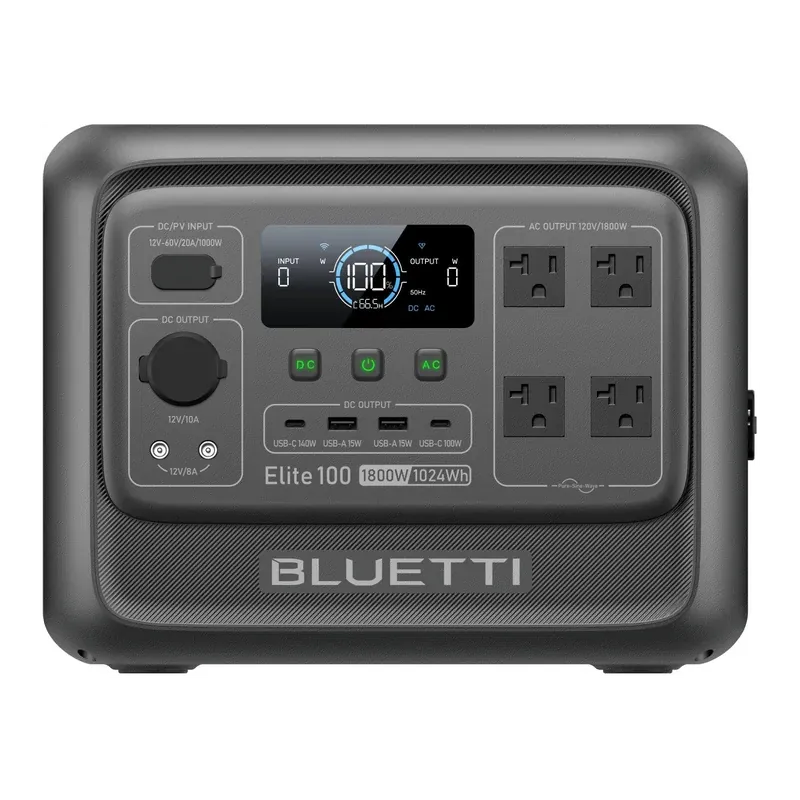
BLUETTI Elite 100 V2
1,024 Wh · 1,800 W · $380–$500
We may earn a commission if you buy through these links. It doesn’t change your price. How we make money
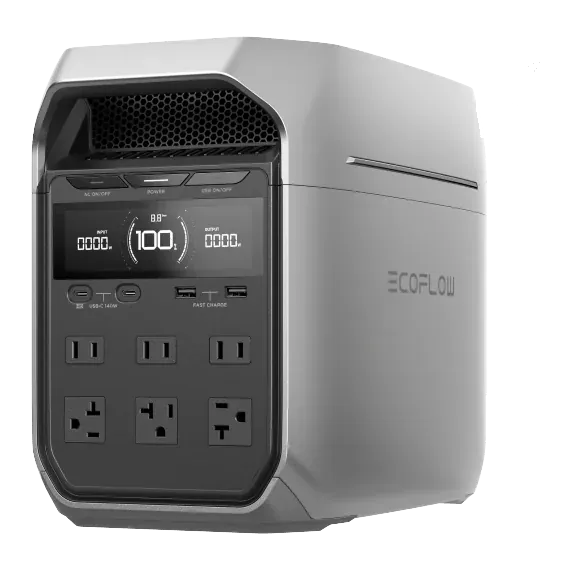
EcoFlow DELTA 3 Plus
1,024 Wh · 1,800 W · $550–$800
We may earn a commission if you buy through these links. It doesn’t change your price. How we make money
Buy the BLUETTI Elite 100 V2 if…
You want the core specs of the DELTA 3 Plus for less money. You carry it to campsites or between rooms and like the 25 lb weight and smaller case. Four AC outlets cover your fridge, CPAP and a lamp, and one charge covers your typical outage.
Buy the EcoFlow DELTA 3 Plus if…
You want to add batteries later, up to 5,000 Wh, for outages that last several days. You need more than four things plugged into AC at once, for example a fridge, router, CPAP, lamp and TV. You want the quicker 56-minute wall refill during rolling outages.
Specs side by side
The better number in each row is highlighted.
| Spec | BLUETTI Elite 100 V2 | EcoFlow DELTA 3 Plus |
|---|---|---|
| Capacity | 1,024 Wh | 1,024 Wh |
| AC output (continuous) | 1,800 W | 1,800 W |
| Surge | 3,600 W | 3,600 W |
| Boost mode (heaters, kettles) | 2,700 W | 2,200 W |
| Battery type | LiFePO4 | LiFePO4 |
| Cycle life (rated) | 4,000 (to 80%) | 4,000 (to 80%) |
| Weight | 25 lb (better) | 27.6 lb |
| Wall charge time | 1 h 10 min (0–100% with TurboBoost; 80% in 45 min) | 56 min (0–100%; about 80% in 30–40 min) (better) |
| Max solar input | 1,000 W | 1,000 W |
| AC outlets | 4 | 6 (better) |
| USB-C ports (max) | 2 (140 W) | 2 (140 W) |
| USB-A ports | 2 | 2 |
| 12V / car port | Yes (3 DC ports) | Yes (3 DC ports) |
| Expandable | No | Yes, up to 5,000 Wh |
| UPS switch-over | 10 ms | 10 ms |
| App control | Yes | Yes |
| Size | 12.6 x 8.5 x 9.8 in | 15.7 x 8.0 x 11.2 in |
| Released | 2025 | 2024 |
| Typical price | $380–$500 (better) | $550–$800 |
Runtime for common devices
On the BLUETTI Elite 100 V2 (1,024 Wh), runtimes go from about 35 min for a microwave (1000 W) to about 4 days for a garage door opener, each running by itself.
Swipe sideways to see every device →
| Power station | Full-size refrigerator 150 W running, about 45 W average | CPAP with heated humidifier 34 W average | Microwave (1000 W) 1,500 W average | Window AC 8,000 BTU 735 W running, about 368 W average | Garage door opener 875 W running, about 8.8 W average |
|---|---|---|---|---|---|
| BLUETTI Elite 100 V2 1,024 Wh | 19 hrs | 26 hrs | 35 min | 2.5 hrs | 4 days |
| EcoFlow DELTA 3 Plus 1,024 Wh | 19 hrs | 26 hrs | 35 min | 2.5 hrs | 4 days |
Estimates: battery Wh × 0.85 ÷ the device’s average draw. Real runtime depends on temperature, battery age and how hard the device works.
See how every power station on this site handles one device:
Same core, same runtime
These two are closer than most matchups. Both have 1,024 Wh LiFePO4 batteries rated for 4,000 cycles, 1,800 W of continuous output and a 3,600 W surge rating. That is why the runtime table shows the same hours on both: about 19 hours on a full-size fridge, about 26 hours on a CPAP with a heated humidifier and about 35 minutes of microwave time.
They start the same motors too. A fridge, an 8,000 BTU window AC and even a 1/2 HP garage door opener, which can need about 3,200 W at start-up, fit under the 3,600 W surge limit on either. Both switch to battery in 10 ms as a UPS, and both have 140 W USB-C ports and three 12V DC outputs.
Each has a boost mode for heating appliances like kettles and space heaters. Bluetti's goes to 2,700 W and EcoFlow's X-Boost to 2,200 W. Boost mode only helps heating loads, so treat it as a fallback, not extra output.
Can either one grow, and which charges faster?
The DELTA 3 Plus accepts EcoFlow's DELTA extra batteries up to 5,000 Wh. At that size, a full-size fridge would run about four days on one charge. The Elite 100 V2 cannot take extra batteries, so about 19 hours of fridge power is its limit before you need to recharge.
Wall charging is close. The EcoFlow refills from empty in about 56 minutes. The Bluetti takes about 70 minutes with TurboBoost on, and reaches 80% in about 45 minutes. Solar is a tie at up to 1,000 W, which the EcoFlow splits across two 500 W inputs. On either one, reaching the full 1,000 W takes several panels.
Size, outlets and value
The Bluetti weighs 25 lb in a 12.6 x 8.5 x 9.8 in case. The EcoFlow weighs 27.6 lb in a 15.7 x 8.0 x 11.2 in case, about a third bigger by volume. For camping or a small apartment, the Bluetti is easier to carry and store.
The EcoFlow has six AC outlets to the Bluetti's four. Both have two USB-A and two USB-C ports. If you plan to run a fridge, router, CPAP and lights at once, the EcoFlow saves you a power strip.
The Bluetti usually sells for roughly $380 to $500 and the EcoFlow for roughly $550 to $800. That gap, often $150 or more, is the cost of expansion, two extra outlets and a slightly faster recharge.
Common questions
- Do the BLUETTI Elite 100 V2 and DELTA 3 Plus run a fridge for the same time?
- Yes. Both have 1,024 Wh, so a typical full-size fridge averaging about 45 W runs about 19 hours on either. Only the EcoFlow can add batteries, up to about four days at 5,000 Wh.
- Can I add a battery to the BLUETTI Elite 100 V2?
- No. It is fixed at 1,024 Wh. The DELTA 3 Plus expands to 5,000 Wh with EcoFlow's DELTA extra batteries.
- Which charges faster from the wall?
- The EcoFlow, at about 56 minutes from empty. The Bluetti takes about 70 minutes with TurboBoost, or about 45 minutes to reach 80%.
- Which is easier to carry?
- The Bluetti. It weighs 25 lb against 27.6 lb and its 12.6 x 8.5 x 9.8 in case is noticeably smaller than the EcoFlow's 15.7 x 8.0 x 11.2 in.
Full specs and buying guides
More comparisons
- EcoFlow DELTA 3 Plus vs Jackery Explorer 1000 v2: which should you buy?
- EcoFlow DELTA 3 Plus vs Anker SOLIX C1000 Gen 2: which should you buy?
- EcoFlow DELTA 3 vs EcoFlow DELTA 3 Plus: which should you buy?
- DJI Power 1000 V2 vs EcoFlow DELTA 3 Plus: which should you buy?
- BLUETTI AC180 vs BLUETTI Elite 100 V2: which should you buy?
- Goal Zero Yeti 1000 (6th Gen) vs EcoFlow DELTA 3 Plus: which should you buy?