
DJI Power 1000 V2 vs EcoFlow DELTA 3 Plus: which should you buy?
The short verdict
For home backup, the DJI Power 1000 V2 is the better buy for most people. It has the same 1,024 Wh battery, more continuous output (2,600 W against 1,800 W), the same 56-minute wall recharge, a 10 ms UPS and expansion to 11,264 Wh, more than twice the EcoFlow's 5,000 Wh ceiling. It also usually costs a couple hundred dollars less. The trade-offs: it weighs 31.3 lb, has no car socket and needs a DJI add-on to charge from solar.
Its surge limit is also lower. The DJI tops out at 2,600 W for start-up surge, while the EcoFlow handles 3,600 W, so the EcoFlow starts some heavy motors, like a 120V 1/2 HP well pump or a garage door opener, that the DJI cannot.
Choose the EcoFlow for camping, van life or a plug-and-play solar setup, where built-in solar inputs, a car socket and lower weight matter more.
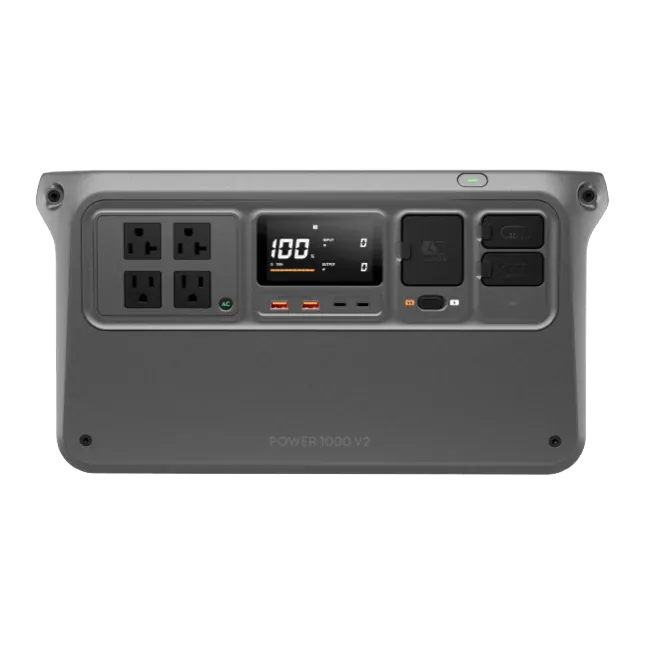
DJI Power 1000 V2
1,024 Wh · 2,600 W · $340–$450
We may earn a commission if you buy through these links. It doesn’t change your price. How we make money
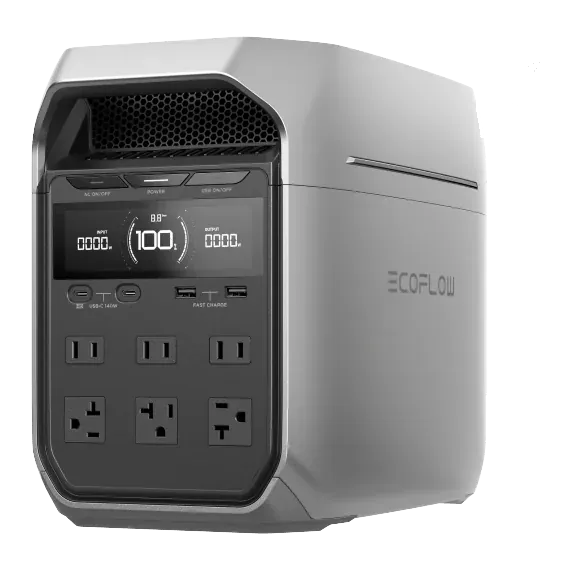
EcoFlow DELTA 3 Plus
1,024 Wh · 1,800 W · $550–$800
We may earn a commission if you buy through these links. It doesn’t change your price. How we make money
Buy the DJI Power 1000 V2 if…
You want home backup at a lower price and may add batteries later, up to 11,264 Wh. You want to run high-draw appliances like an 1,875 W hair dryer, which the 2,600 W output handles. You plan to keep it plugged in as a UPS for a computer or router and will rarely move it.
Buy the EcoFlow DELTA 3 Plus if…
You need to start a motor with a big surge, like a 120V 1/2 HP well pump or a garage door opener. You camp or travel and want a car socket, three 12V DC outputs and solar panels that plug straight in, up to 1,000 W. You carry it often and prefer 27.6 lb to 31.3 lb.
Specs side by side
The better number in each row is highlighted.
| Spec | DJI Power 1000 V2 | EcoFlow DELTA 3 Plus |
|---|---|---|
| Capacity | 1,024 Wh | 1,024 Wh |
| AC output (continuous) | 2,600 W (better) | 1,800 W |
| Surge | 2,600 W | 3,600 W (better) |
| Boost mode (heaters, kettles) | None | 2,200 W |
| Battery type | LiFePO4 | LiFePO4 |
| Cycle life (rated) | 4,000 (to 80%) | 4,000 (to 80%) |
| Weight | 31.3 lb | 27.6 lb (better) |
| Wall charge time | 56 min (Fast Recharge mode; 0–80% in 37 min) | 56 min (0–100%; about 80% in 30–40 min) |
| Max solar input | 1,800 W (needs add-on) | 1,000 W |
| AC outlets | 4 | 6 (better) |
| USB-C ports (max) | 2 (140 W) | 2 (140 W) |
| USB-A ports | 2 | 2 |
| 12V / car port | No | Yes (3 DC ports) |
| Expandable | Yes, up to 11,264 Wh | Yes, up to 5,000 Wh |
| UPS switch-over | 10 ms | 10 ms |
| App control | Yes | Yes |
| Size | 17.6 x 8.9 x 9.1 in | 15.7 x 8.0 x 11.2 in |
| Released | 2025 | 2024 |
| Typical price | $340–$450 (better) | $550–$800 |
Needs add-on: solar charging on that unit needs a separate charger from the brand, sold separately. The figure shown is the best case with that add-on, so we don’t highlight a winner in that row.
Runtime for common devices
On the DJI Power 1000 V2 (1,024 Wh), runtimes go from about 30 min for a hair dryer (1875W) to about 26 hrs for a CPAP with heated humidifier, each running by itself.
Swipe sideways to see every device →
| Power station | Full-size refrigerator 150 W running, about 45 W average | CPAP with heated humidifier 34 W average | Hair dryer (1875W) 1,875 W average | Well pump (1/2 HP) 1,000 W running, about 50 W average | Garage door opener 875 W running, about 8.8 W average |
|---|---|---|---|---|---|
| DJI Power 1000 V2 1,024 Wh | 19 hrs | 26 hrs | 30 min | Can’t run it | Can’t run it |
| EcoFlow DELTA 3 Plus 1,024 Wh | 19 hrs | 26 hrs | Can’t run it | 17 hrs | 4 days |
Estimates: battery Wh × 0.85 ÷ the device’s average draw. Real runtime depends on temperature, battery age and how hard the device works.
See how every power station on this site handles one device:
Can either one start a well pump or garage door opener?
The DJI puts out 2,600 W continuous. That covers an 1,875 W hair dryer, a single induction burner on high and most single plug-in household appliances. The EcoFlow's 1,800 W handles the induction burner and a microwave, but not the hair dryer at full heat.
Start-up surge is where the EcoFlow wins. DJI does not list a surge rating above its 2,600 W output, while the EcoFlow handles 3,600 W. A fridge, sump pump or 8,000 BTU window AC starts fine on either. A 1/2 HP well pump, at about 3,000 W to start, or a garage door opener, at about 3,200 W, starts on the EcoFlow but not the DJI.
One caution on well pumps: most are hard-wired on 230 V and need an electrician-installed inlet, not an extension cord. Both of these units put out 120V only, so check your pump before counting on either one for water.
Capacity and expansion
Out of the box, runtime is identical. Both hold 1,024 Wh, enough for about 19 hours on a full-size fridge or about three nights on a CPAP with a heated humidifier.
The difference is room to grow. The EcoFlow expands to 5,000 Wh, roughly four days of fridge power. The DJI expands to 11,264 Wh with five expansion batteries, roughly nine days of fridge power. For a house that can lose power for a week after a storm, the DJI has the much higher ceiling.
Which one is easier to charge from solar?
Both refill from a wall outlet in about 56 minutes, the DJI in its Fast Recharge mode. The DJI reaches 80% in about 37 minutes and the EcoFlow in about 30 to 40 minutes. Call it a tie.
Solar is different, and the DJI's bigger number comes with a catch. The EcoFlow has two built-in solar inputs that take up to 1,000 W combined, so panels plug straight in. The DJI's 1,800 W figure needs DJI's Super Fast Charger, sold separately. With the basic MPPT module it takes 400 W, and with no add-on it cannot charge from panels at all. If you already own panels, add the cost of that accessory when you compare prices.
Size, ports and value
The DJI weighs 31.3 lb against 27.6 lb and comes in a longer 17.6 x 8.9 x 9.1 in case. Both switch to battery in 10 ms and both have 140 W USB-C ports. The EcoFlow has six AC outlets to the DJI's four, plus three 12V DC outputs and a car socket. The DJI has no car socket, and its DC output needs DJI's SDC accessories.
The DJI usually sells for roughly $340 to $450 and the EcoFlow for roughly $550 to $800. A solar add-on for the DJI narrows that gap, but for wall-charged home backup the DJI gives more output and far more expansion for less money.
Common questions
- Can the DJI Power 1000 V2 run a well pump?
- Not a typical 1/2 HP pump. It can need about 3,000 W to start, above the DJI's 2,600 W limit. The DELTA 3 Plus, with a 3,600 W surge rating, can start a 120V pump and would keep it cycling for about 17 hours with normal household water use. Many well pumps are wired for 230V, which neither unit supplies.
- Which one expands further?
- The DJI, to 11,264 Wh against 5,000 Wh for the EcoFlow. At full size, that is roughly nine days of full-size fridge power on the DJI and about four days on the EcoFlow.
- Can the DJI Power 1000 V2 charge from solar panels?
- Yes, but only through a DJI add-on sold separately. The Super Fast Charger allows up to 1,800 W and the MPPT module 400 W. The DELTA 3 Plus needs no add-on: its two built-in inputs take up to 1,000 W.
- Will either one run a hair dryer?
- The DJI will. Its 2,600 W output runs an 1,875 W dryer for roughly half an hour on a full charge. The EcoFlow's 1,800 W is not enough at full heat.
Full specs and buying guides
More comparisons
- EcoFlow DELTA 3 Plus vs Jackery Explorer 1000 v2: which should you buy?
- EcoFlow DELTA 3 Plus vs Anker SOLIX C1000 Gen 2: which should you buy?
- EcoFlow DELTA 3 vs EcoFlow DELTA 3 Plus: which should you buy?
- BLUETTI Elite 100 V2 vs EcoFlow DELTA 3 Plus: which should you buy?
- Goal Zero Yeti 1000 (6th Gen) vs EcoFlow DELTA 3 Plus: which should you buy?