#1
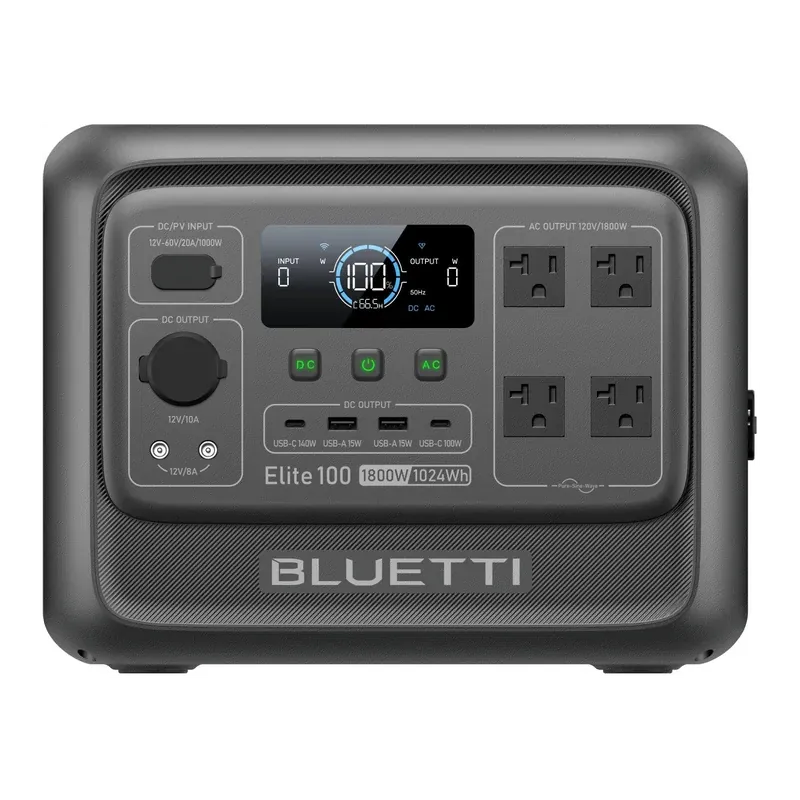
BLUETTI Elite 100 V2
$380–$500 · price checked
- Capacity
- 1,024 Wh
- Output
- 1,800 W (3,600 W surge)
- Battery
- LiFePO4, 4,000 cycles
- Weight
- 25 lb
- Wall charge
- 1 h 10 min
- Solar input
- 1,000 W
Why it won: Runs a full-size refrigerator for about 19 hrs on one charge.
- 1,800 W output runs most kitchen appliances one at a time
- Full recharge from a wall outlet in about 70 minutes
- 25 lb, much lighter than the older AC180
- 4,000-cycle battery rated for about 10 years of use
- Cannot add extra batteries
- 1,024 Wh will run a fridge for roughly a day, not several days
- Reaching the full 1,000 W solar input takes several panels
Check price on Amazon for BLUETTI Elite 100 V2 (opens in a new tab)Check price at Bluetti for BLUETTI Elite 100 V2 (opens in a new tab)
We may earn a commission if you buy through these links. It doesn’t change your price. How we make money