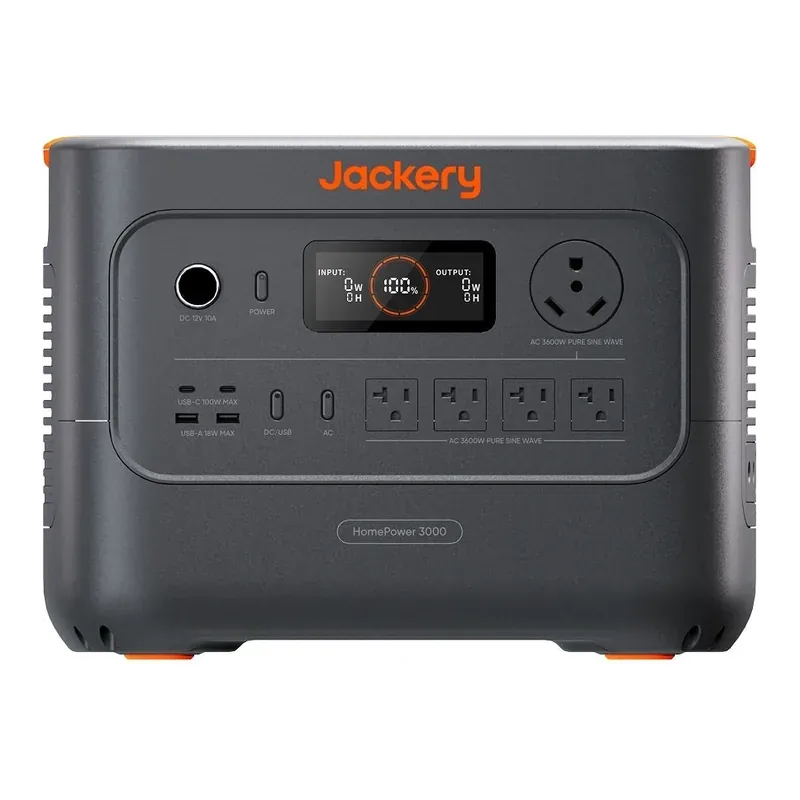
Jackery HomePower 3000
- Capacity
- 3,072 Wh
- Output
- 3,600 W output
- Weight
- 59.5 lb
- Battery
- LiFePO4
We may earn a commission if you buy through these links. It doesn’t change your price. How we make money

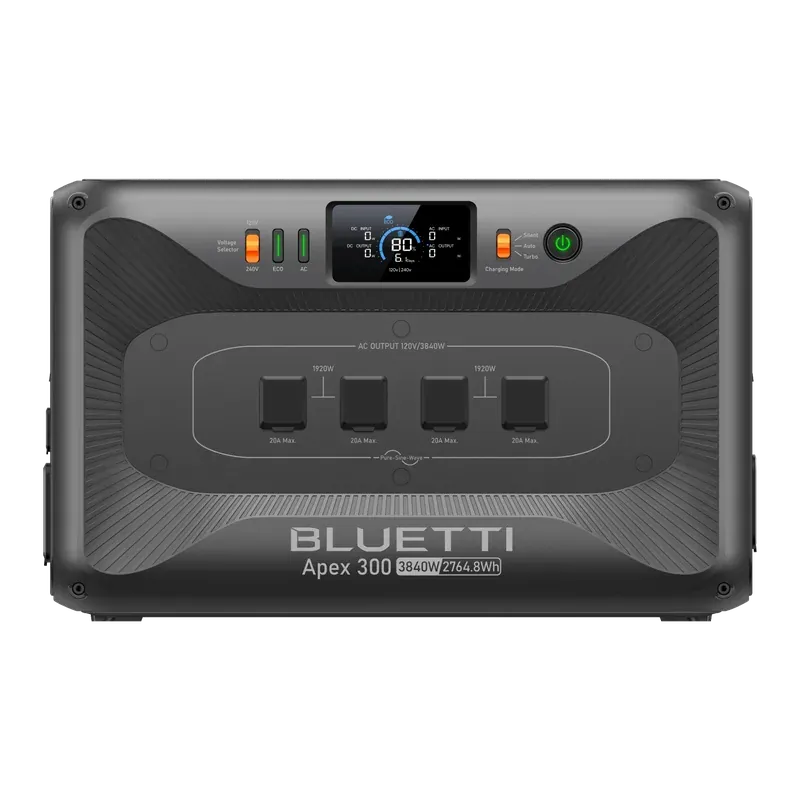
The Bluetti Apex 300 is a 2025 home-backup system that starts as one 2,765 Wh box and grows to 33,485 Wh with six B500K batteries. It supplies 3,840 W at 120V and 240V, has RV-style TT-30 and 14-50 outlets, and can switch over with no gap on two outlets in 240V mode (20 ms on the others). It weighs 83.8 lb, has no USB or 12V ports without the add-on Hub D1, and takes about 2 hours to refill from a normal wall outlet (65 minutes with an optional 30A or 50A cable).
We may earn a commission if you buy through these links. It doesn’t change your price. How we make money
On its own battery, the Apex 300 runs a full-size fridge for about 52 hours and a CPAP with a heated humidifier for about eight nights. A 1/2 HP well pump with normal water use lasts about 47 hours. With all six B500K batteries added (33,485 Wh), that same fridge would run for about 26 days.
One device at a time, from a full charge. Devices that cycle on and off (fridges, freezers, heaters, pumps) use their average draw.
Battery Wh × 0.85 ÷ the device’s average watts. “Can’t run it” means the device needs more than 3,840 W or a start-up surge above 7,680 W. Try your own mix in the calculator.
A full answer for each device on the BLUETTI Apex 300: hours, start-up surge and other units to consider.
Think of the Apex 300 as the first block of a home battery, not a grab-and-go station. The base unit holds 2,765 Wh, less than the Jackery HomePower 3000, but it adds up to six B500K batteries for 33,485 Wh. That is the highest ceiling on this site, ahead of the Anker SOLIX F3800 Plus (26,880 Wh) and the DJI Power 2000 (22,528 Wh). It suits a homeowner who plans to add solar, wire it into the house and build toward several days of backup.
Two details set it apart. First, it has no USB or 12V ports at all. Phones, laptops and a 12V cooler need the optional Hub D1, or a wall charger plugged into one of its six AC outlets. Second, in 240V mode two of its outlets switch over with no gap (0 ms), which no other unit here lists. The rest switch in 20 ms. With 3,840 W of output and a 7,680 W surge, it starts a well pump or an 8,000 BTU window AC with room to spare.
It is built to stay in one place. The base unit alone weighs 83.8 lb. From a standard wall outlet it takes about 2 hours to refill, by Bluetti’s estimate, or about 65 minutes with the optional 30A or 50A cable. Up to 2,400 W of solar can refill the base battery in a little over an hour of ideal sun. Budget for the add-ons, too: the batteries and home panel kit cost far more than the box itself.

3,072 Wh · 3,600 W output · 59.5 lb
Pick the HomePower 3000 if you want the most battery in one box today and do not plan to expand. It holds 3,072 Wh, weighs 59.5 lb, has USB-C, USB-A and a car port built in, and usually costs less.
3,840 Wh · 6,000 W output · 136.7 lb
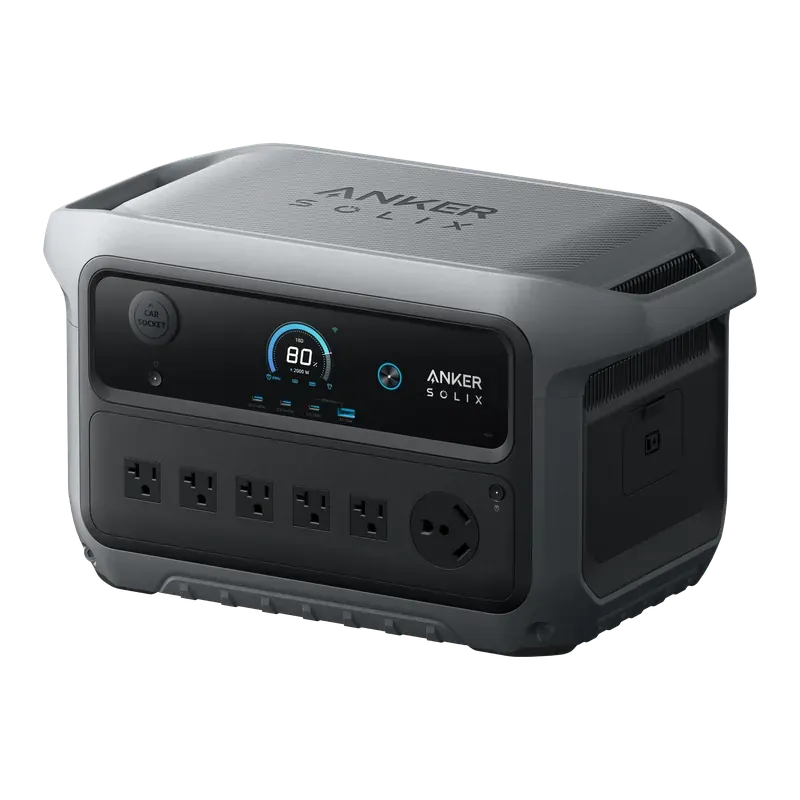
Pick the F3800 Plus if you need to run several big loads at once. It puts out 6,000 W against 3,840 W and takes 3,200 W of solar, but it weighs 136.7 lb and costs more.
| Spec | BLUETTI Apex 300 |
|---|---|
| Capacity | 2,764.8 Wh |
| AC output (continuous) | 3,840 W |
| Surge | 7,680 W |
| Boost mode (heaters, kettles) | 7,680 W |
| Battery type | LiFePO4 |
| Cycle life (rated) | 6,000 (to 80%) |
| Weight | 83.8 lb |
| Wall charge time | 1 h 50 min (estimated, from a standard wall outlet) |
| Max solar input | 2,400 W |
| AC outlets | 6 |
| USB-C ports (max) | 0 (0 W) |
| USB-A ports | 0 |
| 12V / car port | No |
| Expandable | Yes, up to 33,485 Wh |
| UPS switch-over | 20 ms |
| App control | Yes |
| Size | 20.67 x 12.87 x 12.6 in |
| Released | 2025 |
| Typical price | $1,200–$1,600 |
Specs come from the maker’s own pages, checked . Runtimes use our own watt-hour math. How we pick

We may earn a commission if you buy through these links. It doesn’t change your price. How we make money

We may earn a commission if you buy through these links. It doesn’t change your price. How we make money

We may earn a commission if you buy through these links. It doesn’t change your price. How we make money
On the Anker SOLIX F3800 Plus (3,840 Wh), runtimes go from about 2 hrs for a microwave (1000 W) to about 5 days for a Wi-Fi router + cable modem, each running by itself.
Swipe sideways to see every device →
| Power station | CPAP with heated humidifier 34 W average | Wi-Fi router + cable modem 25 W average | Full-size refrigerator 150 W running, about 45 W average | 55-inch LED TV 90 W average | Microwave (1000 W) 1,500 W average |
|---|---|---|---|---|---|
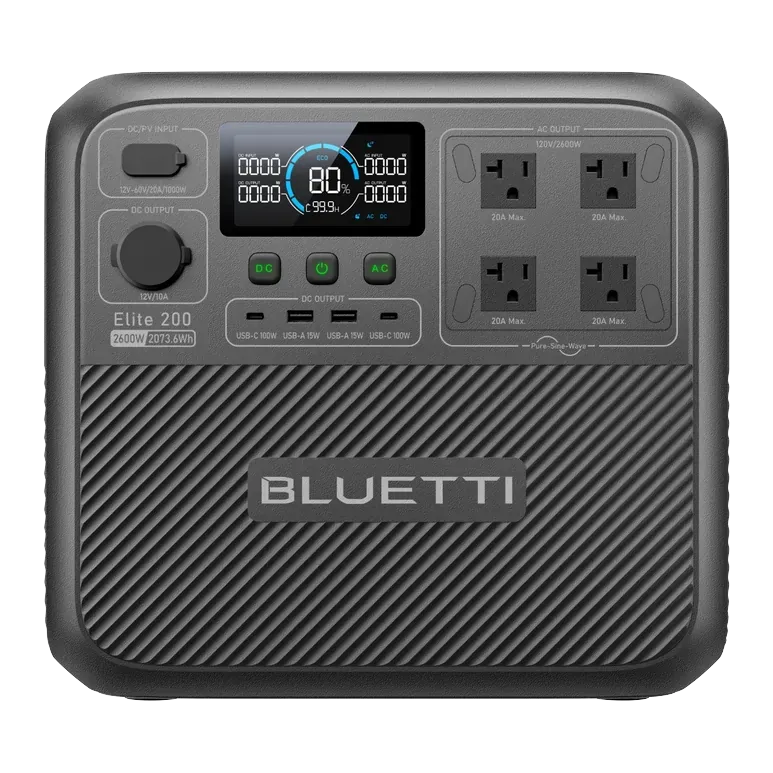
| BLUETTI Elite 200 V2 2,074 Wh | 2 days | 3 days | 39 hrs | 20 hrs | 1 hr |
| BLUETTI Apex 300 2,765 Wh | 3 days | 4 days | 2 days | 26 hrs | 1.5 hrs |
| Jackery HomePower 3000 3,072 Wh | 3 days | 4 days | 2 days | 29 hrs | 1.5 hrs |
| Anker SOLIX F3800 Plus 3,840 Wh | 4 days | 5 days | 3 days | 36 hrs | 2 hrs |
Estimates: battery Wh × 0.85 ÷ the device’s average draw. Real runtime depends on temperature, battery age and how hard the device works.