Yes, if the station has at least 2,100 W of surge. A 1/3 HP sump pump runs at about 800 W, so a 1,000 Wh unit lasts about 11 hours if the pump runs 10% of the time, and only about 1 hour if it runs nonstop.
A 1/3 HP sump pump draws about 800 W while it runs, and some models, like the Zoeller M53 at 9.7 amps, pull closer to 1,100 W. The bigger problem is starting it. The motor needs about 2,100 W for a moment each time the float switch kicks it on. None of the 300 to 500 Wh units in our table can start it. Every 1,000 Wh class unit can.
How long the battery lasts depends on the rain. We assume the pump runs about 10% of the time, or 6 minutes in every hour. That averages 80 W, or about 1,920 Wh over 24 hours. After inverter losses, a full day takes roughly 2,300 Wh of battery. A 1,000 Wh unit lasts about 11 hours at that pace, a 2,000 Wh unit about 22 hours, and a 3,000 Wh unit about 33 hours. In a heavy storm the pump may run nonstop, and then a 1,000 Wh unit lasts only about 1 hour.
A power station also needs someone to plug the pump in, unless it is already connected in UPS or pass-through mode. If your basement floods often, a power station is usually the wrong main tool. A battery backup sump pump made for the job, or a generator connected through a proper inlet, is the steadier answer. A power station works best as a short-term bridge when you are home to keep an eye on it.
How long does each power station run a sump pump (1/3 HP)?
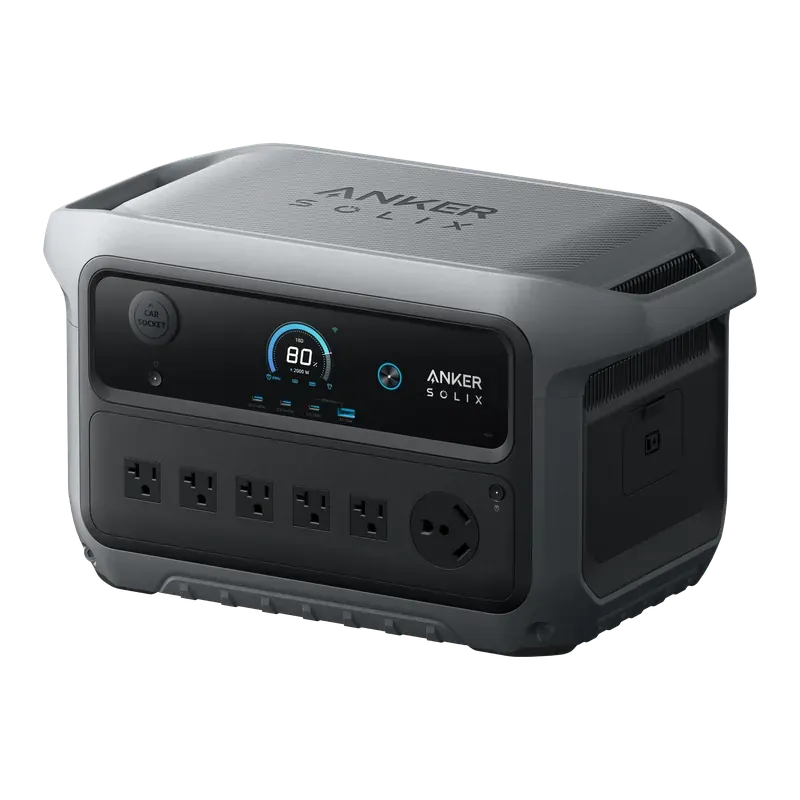
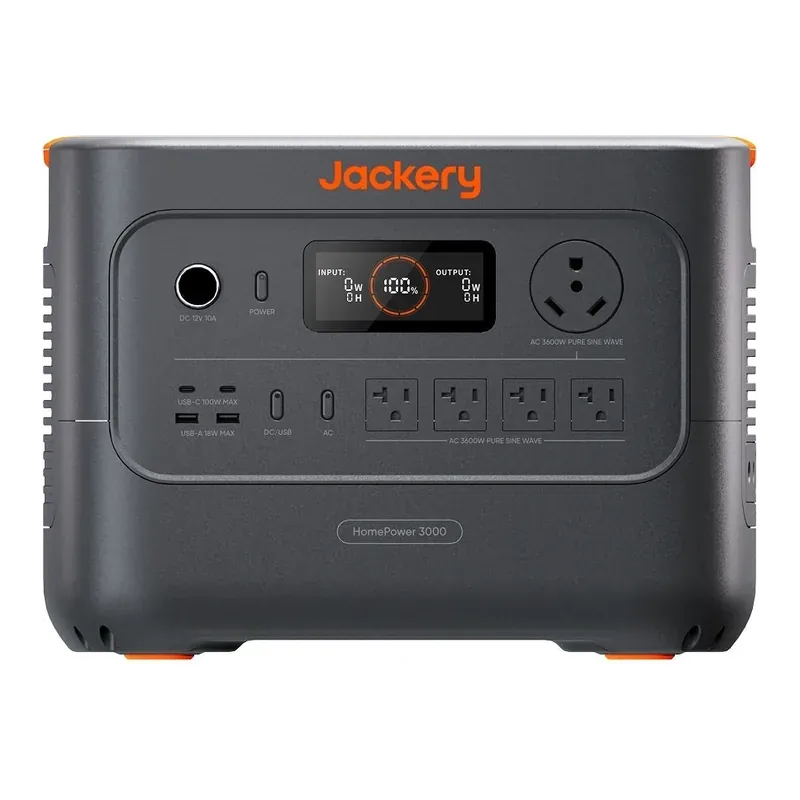
At about 80 W on average, a sump pump (1/3 HP) runs for about 11 hrs on a 1,000 Wh-class unit (998–1,070 Wh) and about 44 hrs on the 4,096 Wh EcoFlow DELTA Pro 3. 4 units here can’t run it.
Hours a sump pump (1/3 HP) runs on each power station, from a full charge with nothing else plugged in (15% inverter loss). Sorted by battery size.
Swipe sideways for battery size, output and price →
Hours a sump pump (1/3 HP) runs on each power station, from a full charge with nothing else plugged in (15% inverter loss). Sorted by battery size.
Estimate: battery Wh × 0.85 ÷ 80 W average (800 W × 0.1 duty). Your model may draw more or less; check its label. Prices are typical ranges we checked by hand on October 9, 2026, not live prices.
Where these numbers come from
A Zoeller M53 sump pump draws up to 9.7 amps at 115 V, and generator charts list a 1/3 HP sump pump at 800 W running and about 2,100 W to start. It runs only in short bursts when the pit fills, so energy use is modest, but the start-up needs a station with at least 2,100 W of surge.
We do not test units ourselves. Picks come from the official spec sheets and manuals, the watt-hour math on this site, and prices we check by hand. How we pick
• Set the station up in UPS or pass-through mode with the pump plugged in, so it takes over when the grid drops. Test it once: unplug the station from the wall and pour a bucket of water into the pit to trigger the pump.
• Keep the station off the basement floor and well away from the pit. Water and batteries do not mix.
• Use a heavy-duty extension cord rated above the pump's amps, about 10 A for a 1/3 HP pump, and keep it as short as you can.
• Unplug everything else from the station while the pump is on it. The pump needs all the surge headroom it can get.
• Recharge between storms. Even a few hours on a wall outlet or solar panels when you can get them makes a big difference.
Add the rest of your devices
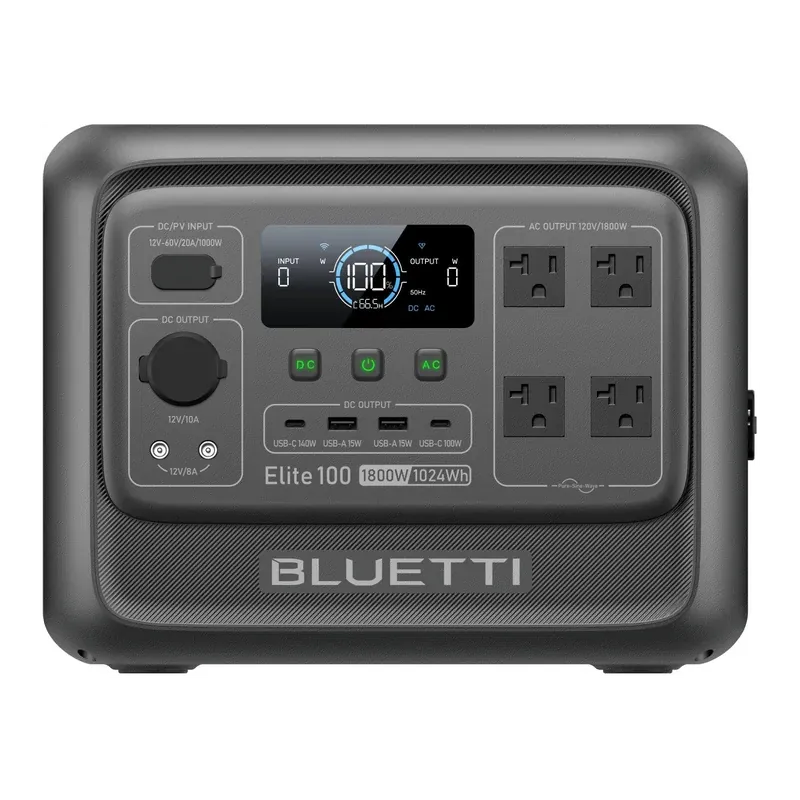
Yes, it can run this, about 11 hrs for a sump pump (1/3 HP) on the BLUETTI Elite 100 V2.
What size power station do I need for a sump pump?
For a 1/3 HP pump, look for at least 2,100 W of surge and 800 W of continuous output. For battery, a full day at 10% pump time needs about 2,300 Wh, so a 2,000 to 3,000 Wh unit is a sensible size.
How long will a 1,000 Wh power station run a sump pump?
About 11 hours if the pump runs 6 minutes in every hour. If it runs nonstop during a heavy storm, about 1 hour. Your pit size and the rain decide which end you are on.
Can a small power station start a sump pump?
Only if its surge rating is high enough. A 1/3 HP pump needs about 2,100 W for a moment at start-up. Units like the Jackery Explorer 300 v2 (600 W surge) and Goal Zero Yeti 500 (1,000 W surge) cannot start it.
Is a power station better than a battery backup sump pump?
For flood protection, a dedicated battery backup pump is usually the better tool. It switches on by itself and is built for the job. A power station is more flexible, since it can also run your fridge or CPAP, but it needs enough surge and more planning.