Skip to content

Popular searches
Not sure what to search? Try the runtime calculator
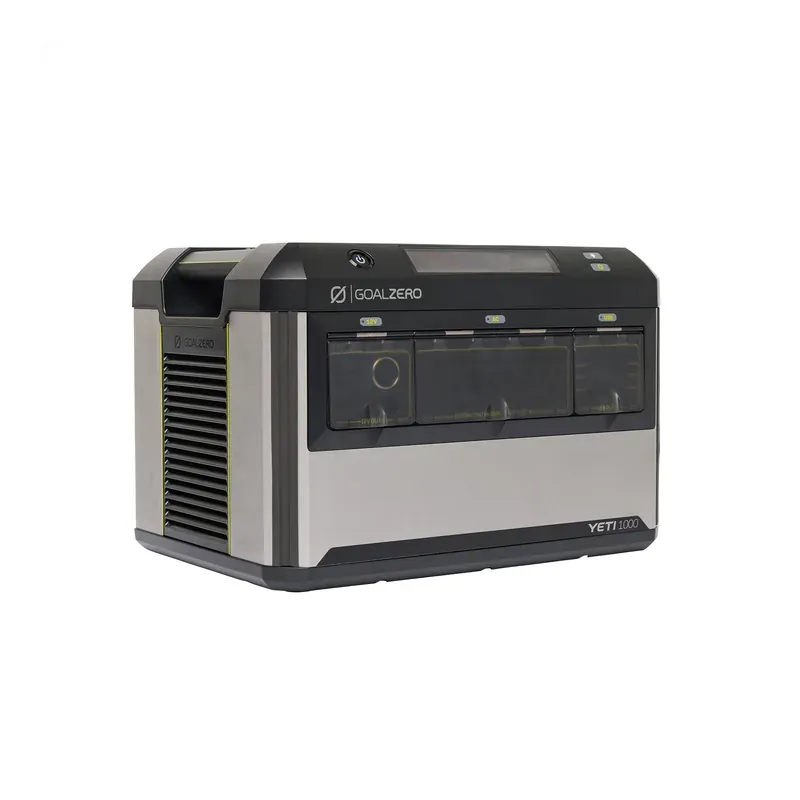
Goal Zero Yeti 1000 (6th Gen) portable power station, front view
Goal Zero

Goal Zero Yeti 1000 (6th Gen)

The Goal Zero Yeti 1000 (6th Gen) is a 2026 model that pairs a 998 Wh LiFePO4 battery with a 2,000 W inverter, four AC outlets and a fast 1,000 W wall charger. It is built for home backup and van or cabin builds, with a 30A 12V port and automatic switch-over to battery in 15 ms. It weighs 35.3 lb, cannot take extra batteries and can be hard to find in stock.

Capacity
998 Wh
Output
2,000 W
3,600 W surge
Weight
35.3 lb
Wall charge
1 h 12 min
List price about $1,200Price checked
Goal Zero Yeti 1000 (6th Gen)
List price about $1,200
Check price of Goal Zero Yeti 1000 (6th Gen) on Amazon (opens in a new tab)

How long does the Goal Zero Yeti 1000 (6th Gen) last?

On one charge, the Yeti 1000 runs a full-size fridge for about 19 hours and a CPAP with a heated humidifier for about 25 hours, or three nights. A Wi-Fi router and cable modem last about 34 hours. It can also start a 1/2 HP well pump, and if the pump runs 5% of the time, the battery covers about 17 hours of it.

Runtime for 18 common devices

One device at a time, from a full charge. Devices that cycle on and off (fridges, freezers, heaters, pumps) use their average draw.

Battery Wh × 0.85 ÷ the device’s average watts. “Can’t run it” means the device needs more than 2,000 W or a start-up surge above 3,600 W. Try your own mix in the calculator.

Runtime for each device

A full answer for each device on the Goal Zero Yeti 1000 (6th Gen): hours, start-up surge and other units to consider.

Is the Goal Zero Yeti 1000 (6th Gen) right for you?

Goal Zero built this one for people who wire things in. Besides four AC outlets, it has a 30A 12V High Power Port, four 12V DC ports and four USB-C ports up to 140 W. That suits a van, cabin or shed where 12V gear runs straight off the battery. It also takes up to 900 W of solar with no adapters.

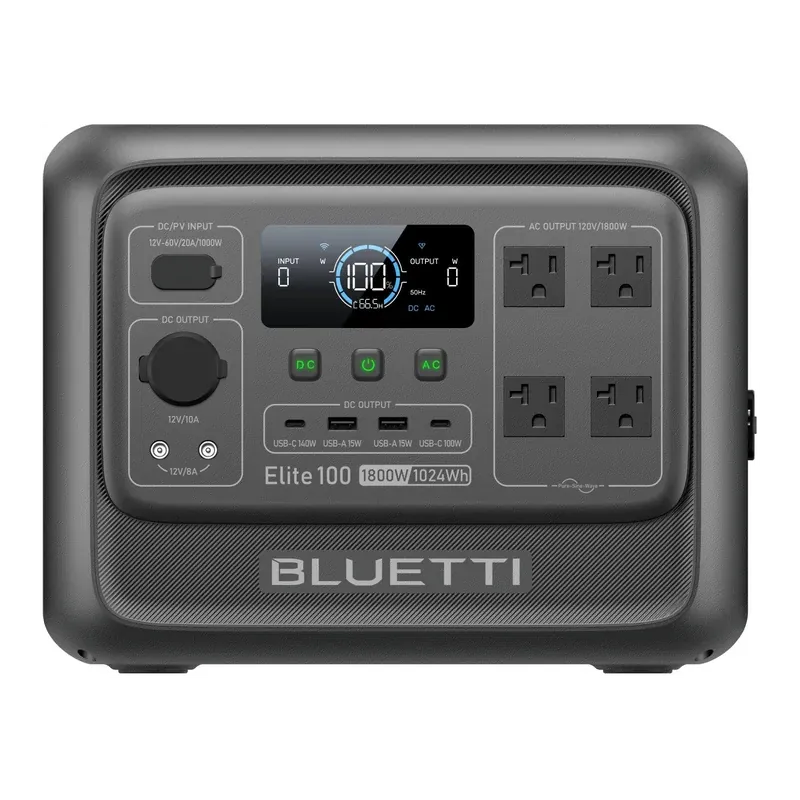
Among the 1,000 Wh units on this site, its 2,000 W inverter and 3,600 W surge sit near the top. It runs an 1,875 W hair dryer, which the 1,800 W DELTA 3 Plus and Elite 100 V2 cannot, and it starts a well pump or an 8,000 BTU window AC. A circular saw is the exception: its roughly 3,700 W start-up is just over the surge limit.

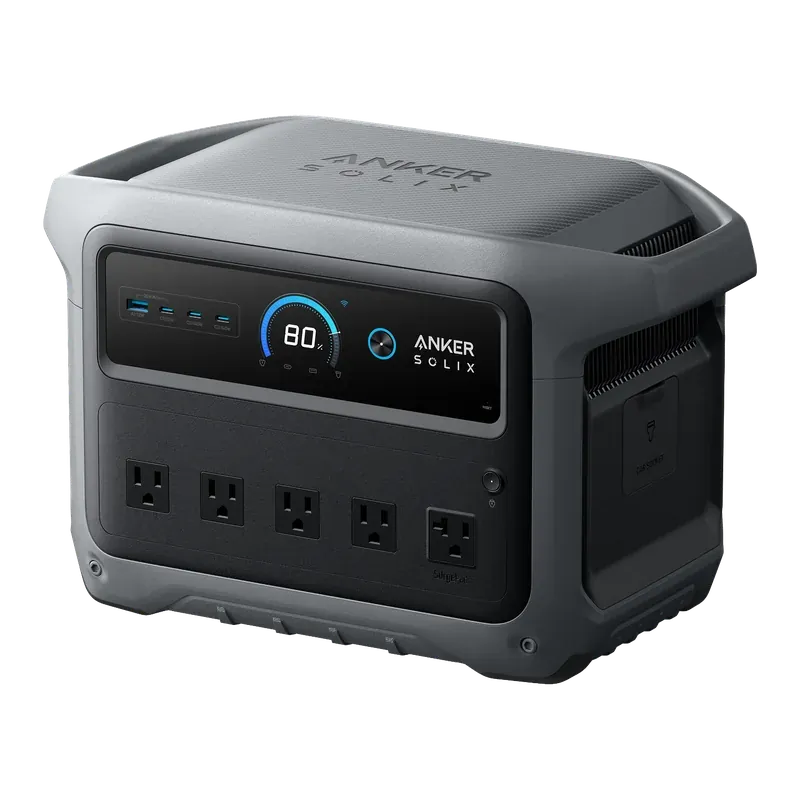
The costs are weight and money. At 35.3 lb it is 10.4 lb heavier than the Anker SOLIX C1000 Gen 2, which holds slightly more energy, and it usually costs several hundred dollars more than other 1,000 Wh units here. It cannot take extra batteries, and its 15 ms switch-over is a bit slower than the 10 ms most of those rivals list. The 72-minute wall charge needs Fast Charge mode; the default is slower.

What we like

  • 2,000 W inverter runs most kitchen appliances and power tools
  • Takes up to 900 W of solar with no adapters
  • Full recharge from a wall outlet in about 72 minutes
  • 30A 12V High Power Port for van and cabin installs

Watch out for

  • At 35.3 lb it is heavier than many rivals of the same capacity
  • Cannot add extra batteries
  • New model that can be hard to find in stock

Consider instead

Full specs

SpecGoal Zero Yeti 1000 (6th Gen)
Capacity998 Wh
AC output (continuous)2,000 W
Surge3,600 W
Boost mode (heaters, kettles)None
Battery typeLiFePO4
Cycle life (rated)4,000 (to 80%)
Weight35.3 lb
Wall charge time1 h 12 min (0–100% in Fast Charge mode; default is slower)
Max solar input900 W
AC outlets4
USB-C ports (max)4 (140 W)
USB-A ports2
12V / car portYes (4 DC ports)
ExpandableNo
UPS switch-over15 ms
App controlYes
Size15.7 x 11.4 x 10.5 in
Released2026
Typical pricelist price about $1,200

Sources

Specs come from the maker’s own pages, checked . Runtimes use our own watt-hour math. How we pick

Compared with

Picked in our guides

Similar size

One size smaller, one size bigger

On the Jackery Explorer 1000 v2 (1,070 Wh), runtimes go from about 35 min for a microwave (1000 W) to about 36 hrs for a Wi-Fi router + cable modem, each running by itself.

Swipe sideways to see every device →

Hours from a full charge, one device at a time
Power stationCPAP with heated humidifier 34 W averageWi-Fi router + cable modem 25 W averageFull-size refrigerator 150 W running, about 45 W average55-inch LED TV 90 W averageMicrowave (1000 W) 1,500 W average
Goal Zero Yeti 500 499 Wh12 hrs17 hrs9.5 hrs4.5 hrsCan’t run it
Goal Zero Yeti 1000 (6th Gen) 998 Wh25 hrs34 hrs19 hrs9.5 hrs35 min
Anker SOLIX C1000 Gen 2 1,024 Wh26 hrs35 hrs19 hrs9.5 hrs35 min
Jackery Explorer 1000 v2 1,070 Wh27 hrs36 hrs20 hrs10 hrs35 min

Estimates: battery Wh × 0.85 ÷ the device’s average draw. Real runtime depends on temperature, battery age and how hard the device works.

Questions about the Goal Zero Yeti 1000 (6th Gen)

Can the Goal Zero Yeti 1000 run a microwave?
Yes. A typical microwave pulls about 1,500 W from the wall, inside the 2,000 W limit. A full charge covers about 34 minutes of microwave time, or roughly six 5-minute reheats.
Is the Yeti 1000 expandable?
No. It cannot take extra batteries, so 998 Wh is its limit. The DELTA 3 Plus, at a similar size, grows to 5,000 Wh with EcoFlow extra batteries.
How long does the Yeti 1000 take to charge?
About 72 minutes from empty to full in Fast Charge mode. The default mode is slower. With solar, it takes up to 900 W.