
Best power station for van life in 2026
As an Amazon Associate, BlackoutWise earns from qualifying purchases. We may also earn a commission when you buy through brand store links. This never changes the price you pay or which products we recommend. How we make money
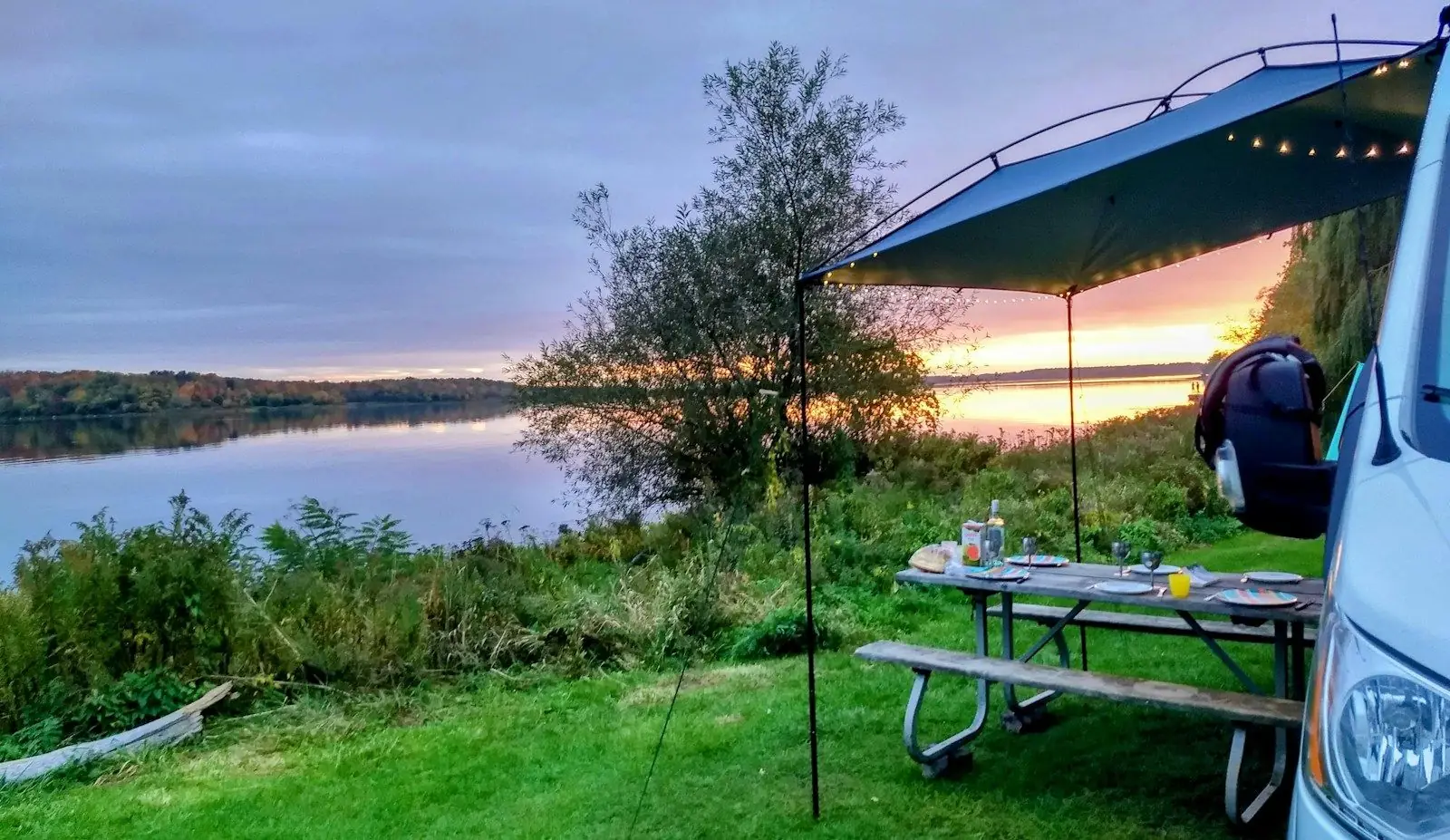
The EcoFlow DELTA 3 Plus is our top pick for van life. It takes up to 1,000 W of solar through two inputs, has 12V and 140 W USB-C ports for van gear, and grows from 1,024 Wh to 5,000 Wh as your build grows.
Van power is a daily budget, not a one-time outage. A 12V compressor cooler, a laptop, a phone and string lights in the evening add up to about 620 Wh a day. Add a box fan on a hot night or a few hours of Starlink and that number climbs quickly. The best van station is the one you can refill from the roof as fast as you drain it.
We do not test units ourselves. These picks rest on the official spec sheets and manuals, the watt-hour math on this site, and prices we check by hand. Runtimes assume about 15% is lost in the inverter, so 12V gear run from the DC ports will usually do a little better. See how we pick.
Quick picks
- 1. Best overall: EcoFlow DELTA 3 Plus1,024 Wh · 1,800 W · $550–$800
- 2. Best for bigger rigs: Anker SOLIX C2000 Gen 22,048 Wh · 2,400 W · $700–$900
- 3. Best value: BLUETTI Elite 100 V21,024 Wh · 1,800 W · $380–$500
- 4. Best for built-in installs: Goal Zero Yeti 1000 (6th Gen)998 Wh · 2,000 W · list price about $1,200
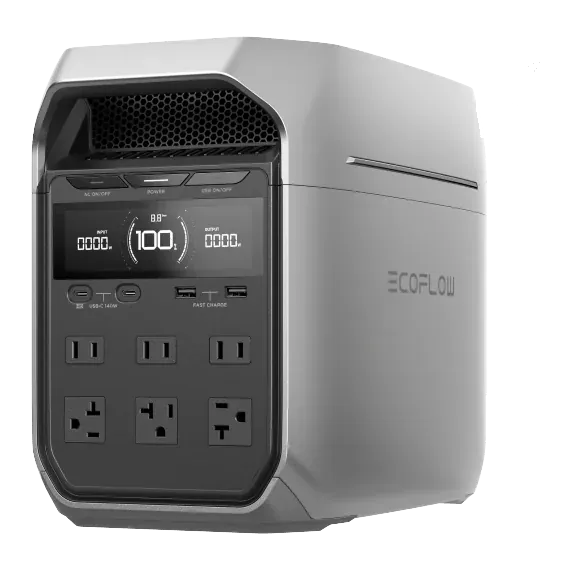
EcoFlow DELTA 3 Plus
$550–$800 · price checked
- Capacity
- 1,024 Wh
- Output
- 1,800 W (3,600 W surge)
- Battery
- LiFePO4, 4,000 cycles
- Weight
- 27.6 lb
- Wall charge
- 56 min
- Solar input
- 1,000 W
Why it won: Its 1,024 Wh battery covers about 1.4 days of a basic van day: cooler, laptop, phone and lights. Two solar inputs take up to 1,000 W total, and 12V outputs plus 140 W USB-C ports cover a cooler, fans and a big laptop. Add DELTA extra batteries and the same daily load lasts about 7 days on 5,000 Wh.
Skip it if: Skip it if floor space is tight. At 27.6 lb and roughly the size of a carry-on bag, it takes real room, and it usually costs $550 to $800.
- Two solar inputs take up to 1,000 W total (500 W each) for fast off-grid refills
- 140 W USB-C ports charge big laptops at full speed
- 10 ms UPS switch-over suits NAS drives, routers and medical devices
- Full recharge from a wall outlet in 56 minutes
- Same 1,024 Wh capacity as the cheaper DELTA 3
- 27.6 lb and roughly the size of a carry-on bag
- The extra cost over the DELTA 3 buys ports and solar, not capacity
We may earn a commission if you buy through these links. It doesn’t change your price. How we make money
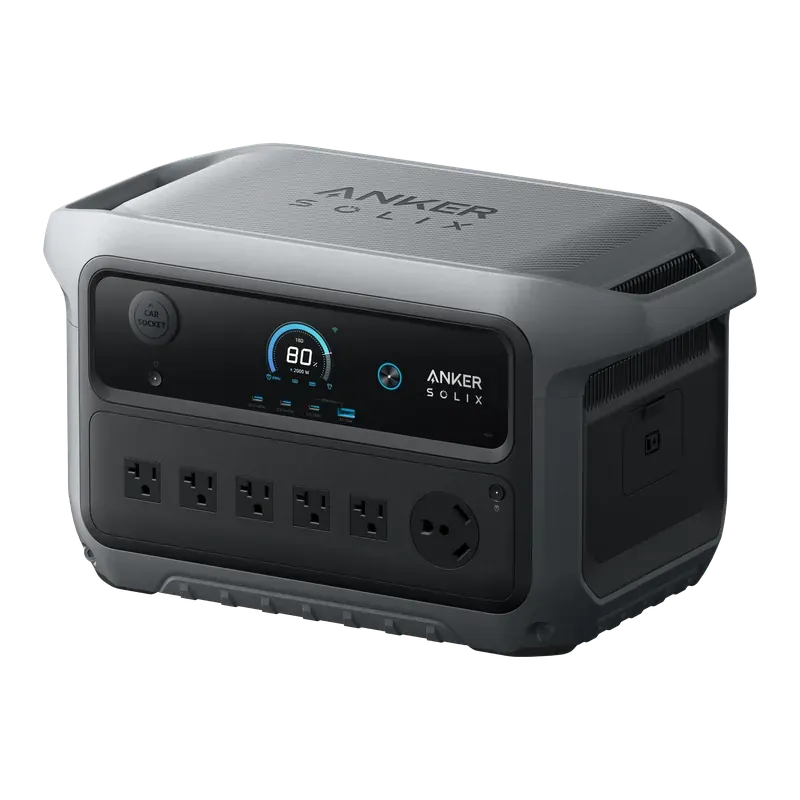
Anker SOLIX C2000 Gen 2
$700–$900 · price checked
- Capacity
- 2,048 Wh
- Output
- 2,400 W (4,000 W surge)
- Battery
- LiFePO4, 4,000 cycles
- Weight
- 41.7 lb
- Wall charge
- 1 h 28 min
- Solar input
- 800 W
Why it won: Its built-in TT-30 outlet plugs straight into an RV or camper, and the 2,048 Wh battery covers about 2.8 basic van days. The 2,400 W inverter runs an 1,800 W induction burner at full power or a microwave, and one BP2000 Gen 2 battery takes it to 4,096 Wh, about 5.6 basic days.
Skip it if: Skip it if you have a small van and want the most solar. Its solar input tops out at 800 W, less than the DELTA 3 Plus, and it weighs 41.7 lb.
- 2,400 W output with 4,000 W peak handles most kitchen appliances
- Built-in TT-30 outlet plugs straight into an RV
- Expands to 4,096 Wh with one BP2000 Gen 2 battery
- 10 ms UPS switch-over protects a router or computer
- 41.7 lb, a two-hand carry
- Only one USB-A port
- List price is much higher than typical sale prices, so wait for a sale
We may earn a commission if you buy through these links. It doesn’t change your price. How we make money
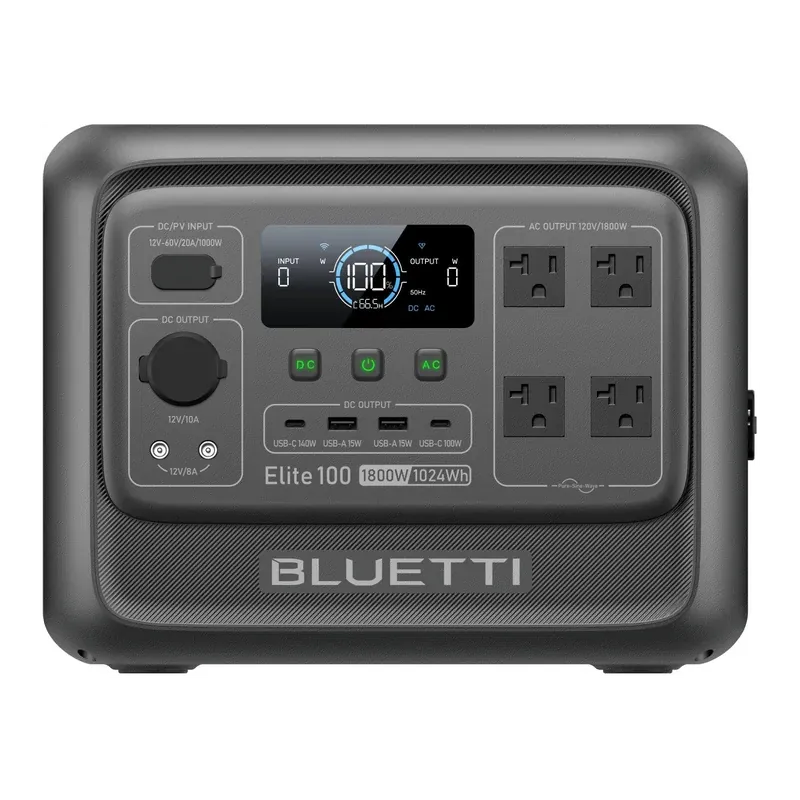
BLUETTI Elite 100 V2
$380–$500 · price checked
- Capacity
- 1,024 Wh
- Output
- 1,800 W (3,600 W surge)
- Battery
- LiFePO4, 4,000 cycles
- Weight
- 25 lb
- Wall charge
- 1 h 10 min
- Solar input
- 1,000 W
Why it won: For usually $500 or less, it matches the DELTA 3 Plus on capacity (1,024 Wh) and solar input (1,000 W) while weighing a little less at 25 lb. That is about 1.4 basic van days per charge, with a car socket and 12V DC outputs for a cooler and fans, plus 140 W USB-C for a laptop.
Skip it if: Skip it if your build will grow, because it cannot take extra batteries. Reaching the full 1,000 W of solar input also takes several panels.
- 1,800 W output runs most kitchen appliances one at a time
- Full recharge from a wall outlet in about 70 minutes
- 25 lb, much lighter than the older AC180
- 4,000-cycle battery rated for about 10 years of use
- Cannot add extra batteries
- 1,024 Wh will run a fridge for roughly a day, not several days
- Reaching the full 1,000 W solar input takes several panels
We may earn a commission if you buy through these links. It doesn’t change your price. How we make money
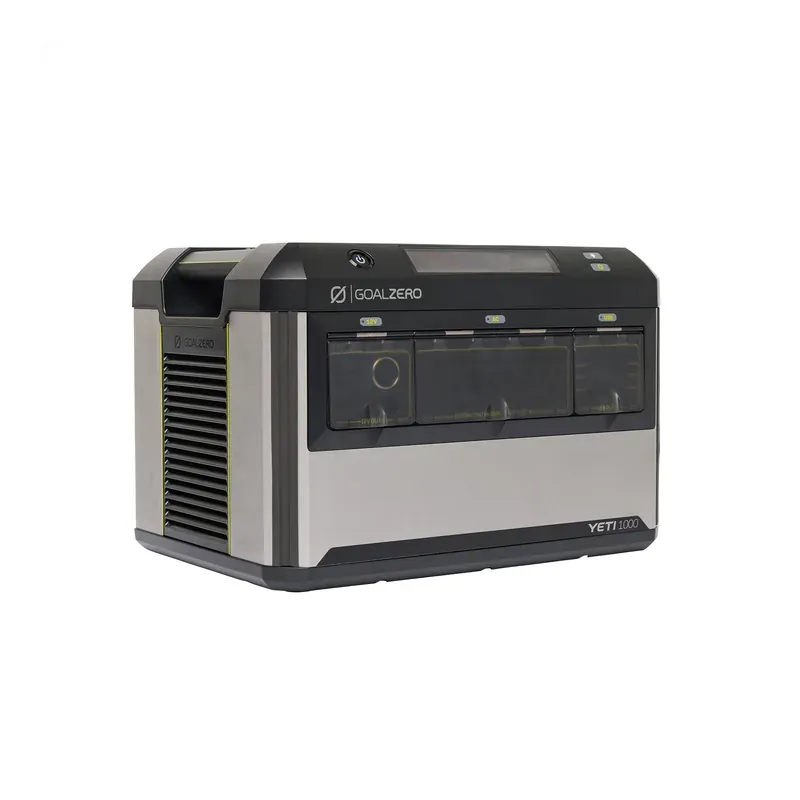
Goal Zero Yeti 1000 (6th Gen)
list price about $1,200 · price checked
- Capacity
- 998 Wh
- Output
- 2,000 W (3,600 W surge)
- Battery
- LiFePO4, 4,000 cycles
- Weight
- 35.3 lb
- Wall charge
- 1 h 12 min
- Solar input
- 900 W
Why it won: Its 30A 12V High Power Port is made for wiring into a van or cabin system, and it takes up to 900 W of solar with no adapters. The 998 Wh battery covers about 1.4 basic van days, and the 2,000 W inverter runs a microwave or coffee maker. It also refills from a wall outlet in about 72 minutes in Fast Charge mode.
Skip it if: Skip it if price matters. It costs about $1,200, cannot take extra batteries, weighs 35.3 lb and can be hard to find in stock.
- 2,000 W inverter runs most kitchen appliances and power tools
- Takes up to 900 W of solar with no adapters
- Full recharge from a wall outlet in about 72 minutes
- 30A 12V High Power Port for van and cabin installs
- At 35.3 lb it is heavier than many rivals of the same capacity
- Cannot add extra batteries
- New model that can be hard to find in stock
We may earn a commission if you buy through these links. It doesn’t change your price. How we make money
How long each pick runs
On the Anker SOLIX C2000 Gen 2 (2,048 Wh), runtimes go from about 19 hrs for a Starlink Standard (Gen 3) to about 7 days for LED string lights, each running by itself.
Swipe sideways to see every device →
| Power station | Electric cooler (12V) 52 W running, about 13 W average | Laptop (13-16 in) 65 W running, about 39 W average | Starlink Standard (Gen 3) 90 W average | Box fan (20 in) 85 W average | LED string lights 10 W average |
|---|---|---|---|---|---|
| EcoFlow DELTA 3 Plus 1,024 Wh | 3 days | 22 hrs | 9.5 hrs | 10 hrs | 4 days |
| Anker SOLIX C2000 Gen 2 2,048 Wh | 6 days | 45 hrs | 19 hrs | 20 hrs | 7 days |
| BLUETTI Elite 100 V2 1,024 Wh | 3 days | 22 hrs | 9.5 hrs | 10 hrs | 4 days |
| Goal Zero Yeti 1000 (6th Gen) 998 Wh | 3 days | 22 hrs | 9.5 hrs | 10 hrs | 4 days |
Estimates: battery Wh × 0.85 ÷ the device’s average draw. Real runtime depends on temperature, battery age and how hard the device works.
Runtime on every station, one device at a time
Specs side by side
Swipe sideways to see every column →
| Spec | EcoFlow DELTA 3 Plus | Anker SOLIX C2000 Gen 2 | BLUETTI Elite 100 V2 | Goal Zero Yeti 1000 (6th Gen) |
|---|---|---|---|---|
| Capacity | 1,024 Wh | 2,048 Wh (better) | 1,024 Wh | 998 Wh |
| AC output (continuous) | 1,800 W | 2,400 W (better) | 1,800 W | 2,000 W |
| Surge | 3,600 W | 4,000 W (better) | 3,600 W | 3,600 W |
| Boost mode (heaters, kettles) | 2,200 W | None | 2,700 W | None |
| Battery type | LiFePO4 | LiFePO4 | LiFePO4 | LiFePO4 |
| Cycle life (rated) | 4,000 (to 80%) | 4,000 (to 80%) | 4,000 (to 80%) | 4,000 (to 80%) |
| Weight | 27.6 lb | 41.7 lb | 25 lb (better) | 35.3 lb |
| Wall charge time | 56 min (0–100%; about 80% in 30–40 min) (better) | 1 h 28 min (0–100% from a wall outlet alone) | 1 h 10 min (0–100% with TurboBoost; 80% in 45 min) | 1 h 12 min (0–100% in Fast Charge mode; default is slower) |
| Max solar input | 1,000 W | 800 W | 1,000 W | 900 W |
| AC outlets | 6 (better) | 5 | 4 | 4 |
| USB-C ports (max) | 2 (140 W) | 3 (140 W) | 2 (140 W) | 4 (140 W) |
| USB-A ports | 2 | 1 | 2 | 2 |
| 12V / car port | Yes (3 DC ports) | Yes (1 DC ports) | Yes (3 DC ports) | Yes (4 DC ports) |
| Expandable | Yes, up to 5,000 Wh | Yes, up to 4,096 Wh | No | No |
| UPS switch-over | 10 ms | 10 ms | 10 ms | 15 ms |
| App control | Yes | Yes | Yes | Yes |
| Size | 15.7 x 8.0 x 11.2 in | 18.1 x 9.8 x 10.1 in | 12.6 x 8.5 x 9.8 in | 15.7 x 11.4 x 10.5 in |
| Released | 2024 | 2025 | 2025 | 2026 |
| Typical price | $550–$800 | $700–$900 | $380–$500 (better) | list price about $1,200 |
Related comparisons
Torn between two of these? Each comparison gives a verdict, specs and runtimes side by side.
How much battery does a day in a van use?
Here is a simple van day. A 12V compressor cooler like the Dometic CFX3 45 is rated 52 W, but once it is cold the compressor runs about a quarter of the time, so it uses about 312 Wh a day. Charging a laptop on and off over six hours adds about 234 Wh. A phone adds about 24 Wh, and LED string lights for five hours add about 50 Wh. That comes to about 620 Wh a day.
Divide by 0.85 for inverter losses and you need about 730 Wh of battery per day. A 1,024 Wh station covers that with some spare, about a day and a half, and a 2,048 Wh station covers almost three days.
Now add comfort. A 20-inch box fan at about 85 W for eight hours uses about 680 Wh, which roughly doubles the day to 1,300 Wh and about 1,530 Wh of battery. Starlink's Standard kit draws about 90 W, so four hours of work online adds about 360 Wh, and leaving it on all day uses about 2,160 Wh, more than a 1,024 Wh station holds.
The takeaway: a 1,000 Wh class station handles a basic van day, and fan nights or long Starlink sessions push you toward 2,000 Wh, more solar, or both.
Solar is your real fuel tank
A station's solar input rating is the most it will accept, not what your panels will make. Panels rarely hit their full rating, and roof panels lie flat, so plan on getting less than the label. A high input limit still matters, because it leaves room to add panels later.
At the full 1,000 W, the DELTA 3 Plus or Elite 100 V2 would put back a basic 620 Wh day in well under an hour of ideal sun. On real days it takes longer, and that cushion is what lets you run the fan or Starlink without watching the battery all evening.
When you can plug in at a campground or a friend's house, wall charging is fast on all four picks. The DELTA 3 Plus refills in about 56 minutes, the Elite 100 V2 in about 70 minutes, the Yeti 1000 in about 72 minutes in Fast Charge mode and the C2000 Gen 2 in about 88 minutes.
What to look for in a van station
Every pick here uses LiFePO4 cells rated for 4,000 cycles. At one full cycle a day, that is about 11 years of full-time travel. NMC packs are lighter for their size but usually rated for far fewer cycles, which wears them out quickly when you cycle daily.
Look for good 12V and USB-C outputs. Running a 12V cooler or fan from the DC side skips the inverter. A 140 W USB-C port charges a 16-inch laptop at full speed without the AC brick, and all four picks have one. DJI's stations have no built-in car socket, which is why they are not on this list.
Think about where it will live. A 25 to 28 lb unit can be moved for charging or cleaning. A 35 to 42 lb unit should be strapped down in one place, which makes the Yeti 1000's 30A port and the C2000 Gen 2's TT-30 outlet more useful for permanent builds.
Mistakes to avoid
Do not plan on electric heat. A 1,500 W space heater averages about 750 W as its thermostat cycles, so it empties a 1,024 Wh station in a little over an hour. An electric blanket at about 150 W uses roughly 600 Wh a night and is a far better fit for a van battery.
Do not leave the AC output switched on when nothing needs it. The inverter uses some power just by being on. Run 12V and USB gear from their own ports when you can.
Do not buy a station you cannot grow. If you are still working out your setup, an expandable unit like the DELTA 3 Plus or C2000 Gen 2 lets you add capacity instead of replacing the whole thing.
Safety and heat
Strap the station down so it cannot slide or tip under hard braking, and keep its vents clear of bedding and bags. Keep it dry and out of direct sun in a closed van, since heat shortens battery life.
If you use a CPAP on the road, budget for it separately and carry a backup plan. A power station should never be the only backup for life-support equipment.
Common questions
- What size power station do I need for van life?
- For a 12V cooler, laptop, phone and lights, plan on about 620 Wh a day, so a 1,000 Wh station covers about a day and a half. Add a fan on hot nights or a few hours of Starlink and you need about 1,150 to 1,530 Wh of battery per day, which points to a 2,000 Wh unit, more solar, or both.
- How long will a power station run a 12V fridge?
- A 12V compressor cooler like the Dometic CFX3 45 averages about 13 W once it is cold, or about 312 Wh a day. A 1,024 Wh station runs it for about 67 hours, close to three days, and a 2,048 Wh station for about five and a half days.
- Can a power station run Starlink all day?
- Only a big one. Starlink's Standard kit draws about 75 to 100 W, roughly 2,160 Wh over 24 hours. A 1,024 Wh station runs it for about 10 hours and a 2,048 Wh unit for about 19 hours, so turning it off overnight saves the most.
- Is 1,000 W of solar input enough for van life?
- For most builds, yes. A basic van day uses about 620 Wh, which is well under an hour at the full 1,000 W rate. Real panels deliver less than their rating, so the extra headroom covers cloudy days and fan nights.
- Can I run a microwave in my van from a power station?
- Yes, with at least 1,500 W of continuous output. A 1,000 W microwave pulls about 1,500 W from the station, and a 5-minute reheat uses about 125 Wh. All four picks here can run one.