
EcoFlow DELTA 3 Plus vs Anker SOLIX C1000 Gen 2: which should you buy?
The short verdict
For most people the Anker SOLIX C1000 Gen 2 is the better value. It has the same 1,024 Wh of capacity, more continuous output (2,000 W against 1,800 W), a slightly faster wall recharge and a lighter body, and it usually costs less. The trade-off is growth. The Anker cannot take extra batteries, while the DELTA 3 Plus expands to 5,000 Wh and takes 1,000 W of solar against 600 W.
So this comes down to how long your outages last. For a few hours to about a day, the Anker covers nearly everything the EcoFlow does, plus a hair dryer at full heat. For storms that knock out power for several days, the EcoFlow's expansion and solar input are worth paying for.
One gap runs the other way. The EcoFlow's 3,600 W surge rating starts a 1/2 HP garage door opener, which can need about 3,200 W, and the Anker's 3,000 W cannot.
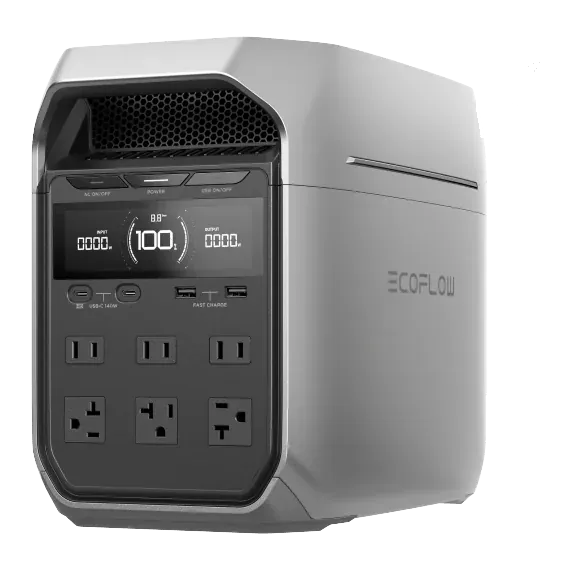
EcoFlow DELTA 3 Plus
1,024 Wh · 1,800 W · $550–$800
We may earn a commission if you buy through these links. It doesn’t change your price. How we make money
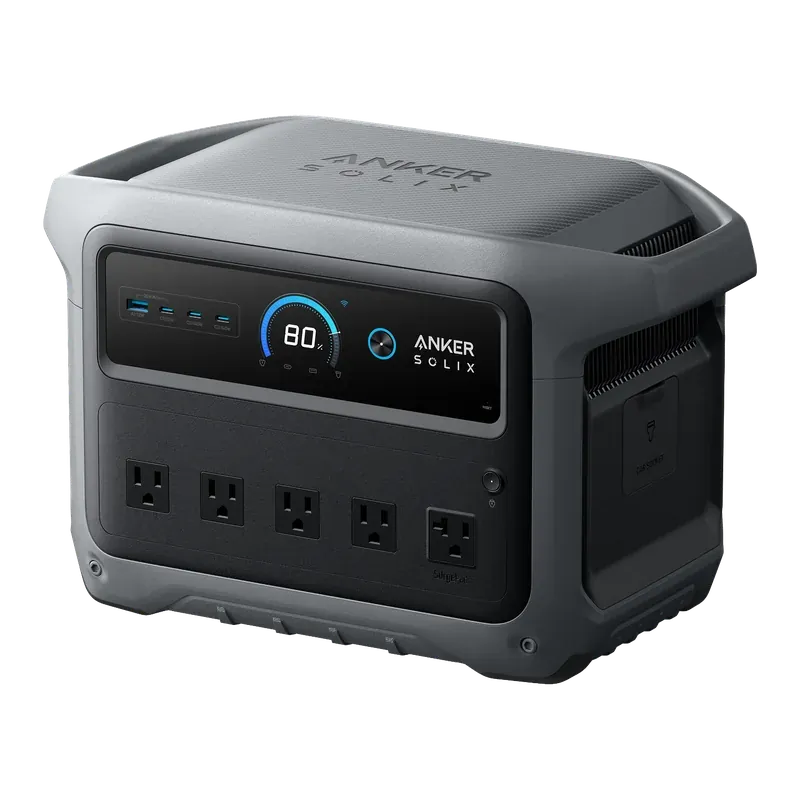
Anker SOLIX C1000 Gen 2
1,024 Wh · 2,000 W · $400–$600
We may earn a commission if you buy through these links. It doesn’t change your price. How we make money
Buy the EcoFlow DELTA 3 Plus if…
You lose power for days at a time and want to add extra batteries later, up to 5,000 Wh. You have or plan to buy solar panels and want to use up to 1,000 W of them. You need to start a hard-starting motor like a garage door opener, or you want six AC outlets and three 12V DC outputs for a van.
Buy the Anker SOLIX C1000 Gen 2 if…
Your outages usually last hours, not days, and 1,024 Wh is enough. You want to run an 1,875 W hair dryer or another high-draw appliance, which fits under its 2,000 W output. You want the quickest wall recharge, about 49 minutes, in a lighter 24.9 lb unit for less money.
Specs side by side
The better number in each row is highlighted.
| Spec | EcoFlow DELTA 3 Plus | Anker SOLIX C1000 Gen 2 |
|---|---|---|
| Capacity | 1,024 Wh | 1,024 Wh |
| AC output (continuous) | 1,800 W | 2,000 W (better) |
| Surge | 3,600 W (better) | 3,000 W |
| Boost mode (heaters, kettles) | 2,200 W | None |
| Battery type | LiFePO4 | LiFePO4 |
| Cycle life (rated) | 4,000 (to 80%) | 4,000 (to 80%) |
| Weight | 27.6 lb | 24.9 lb (better) |
| Wall charge time | 56 min (0–100%; about 80% in 30–40 min) | 49 min (with UltraFast mode turned on in the app) (better) |
| Max solar input | 1,000 W (better) | 600 W |
| AC outlets | 6 (better) | 5 |
| USB-C ports (max) | 2 (140 W) | 3 (140 W) |
| USB-A ports | 2 | 1 |
| 12V / car port | Yes (3 DC ports) | Yes (1 DC ports) |
| Expandable | Yes, up to 5,000 Wh | No |
| UPS switch-over | 10 ms | 10 ms |
| App control | Yes | Yes |
| Size | 15.7 x 8.0 x 11.2 in | 15.1 x 8.2 x 9.6 in |
| Released | 2024 | 2025 |
| Typical price | $550–$800 | $400–$600 (better) |
Runtime for common devices
On the EcoFlow DELTA 3 Plus (1,024 Wh), runtimes go from about 35 min for a microwave (1000 W) to about 4 days for a garage door opener, each running by itself.
Swipe sideways to see every device →
| Power station | Full-size refrigerator 150 W running, about 45 W average | CPAP with heated humidifier 34 W average | Microwave (1000 W) 1,500 W average | Hair dryer (1875W) 1,875 W average | Garage door opener 875 W running, about 8.8 W average |
|---|---|---|---|---|---|
| EcoFlow DELTA 3 Plus 1,024 Wh | 19 hrs | 26 hrs | 35 min | Can’t run it | 4 days |
| Anker SOLIX C1000 Gen 2 1,024 Wh | 19 hrs | 26 hrs | 35 min | 30 min | Can’t run it |
Estimates: battery Wh × 0.85 ÷ the device’s average draw. Real runtime depends on temperature, battery age and how hard the device works.
See how every power station on this site handles one device:
Capacity and expandability
Both hold 1,024 Wh, so out of the box they run the same devices for the same time: about 19 hours on a full-size fridge, about three nights on a CPAP with a heated humidifier and about 35 hours on a Wi-Fi router and modem. That is why most rows in the runtime table above match.
The difference is what you can add. The DELTA 3 Plus works with EcoFlow's DELTA extra batteries up to 5,000 Wh, which would run that fridge for about four days. The C1000 Gen 2 cannot be expanded, unlike the older C1000. If your area sees multi-day outages after storms, that ceiling matters more than any other spec here.
Which one can run a hair dryer or start a garage door opener?
The Anker gives 2,000 W of continuous output against 1,800 W. That extra 200 W covers an 1,875 W hair dryer, which runs on the Anker for roughly half an hour and overloads the EcoFlow at full heat. Most other kitchen appliances, such as a microwave, air fryer, kettle, toaster or single induction burner, fit on both.
Surge goes the other way. The EcoFlow handles 3,600 W of start-up surge and the Anker 3,000 W. A fridge, sump pump or 8,000 BTU window AC starts fine on either. A 1/2 HP garage door opener, which can need about 3,200 W to start, works on the EcoFlow and not the Anker.
EcoFlow's X-Boost mode stretches to 2,200 W, but only for heating appliances, and it is not the same as more continuous output. If you want full heat from a hair dryer or similar load, the Anker's 2,000 W is the number that counts.
Which one charges faster?
From the wall, the Anker refills in about 49 minutes and the EcoFlow in about 56. The Anker's figure has a catch: you need UltraFast mode turned on in the app, and the battery has to be above 68°F. In a cold garage, do not count on the 49-minute figure.
Solar favors the EcoFlow, with two inputs taking up to 1,000 W combined against the Anker's 600 W. In strong sun with enough panels, that is roughly an hour for a full refill against roughly 1.7 hours. Real conditions are slower for both, but the EcoFlow captures more energy on each good day, which is what keeps a fridge going through a long outage.
Size, ports, UPS and value
The Anker weighs 24.9 lb in a 15.1 x 8.2 x 9.6 in case. The EcoFlow weighs 27.6 lb in a 15.7 x 8.0 x 11.2 in case. The Anker is the easier one to move from room to room.
Both switch to battery in 10 ms when wall power drops, which keeps a router, computer or CPAP running through the cut. Both offer 140 W USB-C for laptops. The EcoFlow has six AC outlets to the Anker's five and three 12V DC outputs to its one, while the Anker has a third USB-C port.
The Anker usually sells for roughly $400 to $600 and the EcoFlow for roughly $550 to $800. For the same capacity, the Anker is the better deal unless you will actually use the EcoFlow's expansion, solar headroom or extra surge.
Common questions
- Do the DELTA 3 Plus and Anker C1000 Gen 2 have the same runtime?
- Yes, out of the box. Both have 1,024 Wh, so a full-size fridge runs about 19 hours and a CPAP with a heated humidifier about 26 hours on either. Only the EcoFlow can add batteries to go further.
- Which charges faster?
- From the wall, the Anker: about 49 minutes with UltraFast turned on in the app, against about 56 minutes. From solar, the EcoFlow: up to 1,000 W against 600 W.
- Can I add a battery to the Anker SOLIX C1000 Gen 2?
- No. The Gen 2 cannot be expanded. The DELTA 3 Plus expands to 5,000 Wh, enough to run a full-size fridge for about four days.
- Will either one run a hair dryer?
- The Anker will. Its 2,000 W output covers an 1,875 W dryer for roughly half an hour of drying on a full charge. The EcoFlow's 1,800 W is not enough at full heat.
Full specs and buying guides
More comparisons
- EcoFlow DELTA 3 Plus vs Jackery Explorer 1000 v2: which should you buy?
- Anker SOLIX C1000 Gen 2 vs Jackery Explorer 1000 v2: which should you buy?
- EcoFlow DELTA 3 vs EcoFlow DELTA 3 Plus: which should you buy?
- BLUETTI Elite 100 V2 vs EcoFlow DELTA 3 Plus: which should you buy?
- DJI Power 1000 V2 vs EcoFlow DELTA 3 Plus: which should you buy?
- Goal Zero Yeti 1000 (6th Gen) vs EcoFlow DELTA 3 Plus: which should you buy?