
EcoFlow DELTA 3 vs EcoFlow DELTA 3 Plus: which should you buy?
The short verdict
For most people the plain EcoFlow DELTA 3 is the smarter buy. It has the same 1,024 Wh battery, the same 1,800 W output and 3,600 W surge, the same 56-minute wall recharge, the same weight and the same 5,000 Wh expansion. The Plus usually costs roughly $50 to $100 more, and that buys faster solar and USB-C charging, not more runtime.
The Plus earns its price if you charge from solar. It has two solar inputs that take up to 1,000 W combined, double the DELTA 3's 500 W. Its USB-C ports give 140 W each instead of 100 W, and it adds a third 12V DC output.
If your plan is to charge from the wall between outages and run a fridge, a CPAP and a router, the DELTA 3 does the same job for less.
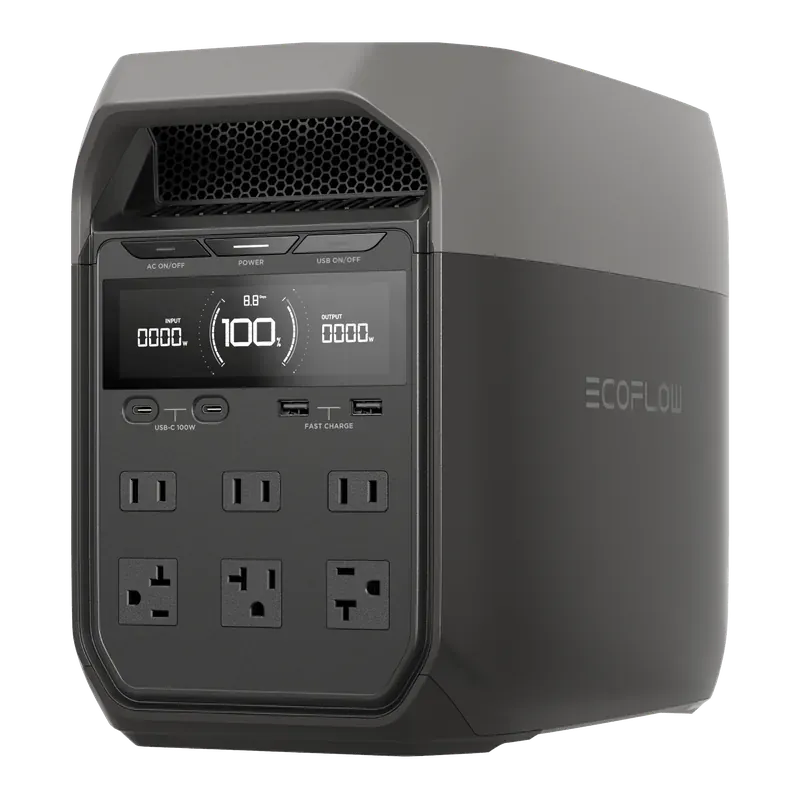
EcoFlow DELTA 3
1,024 Wh · 1,800 W · $500–$700
We may earn a commission if you buy through these links. It doesn’t change your price. How we make money
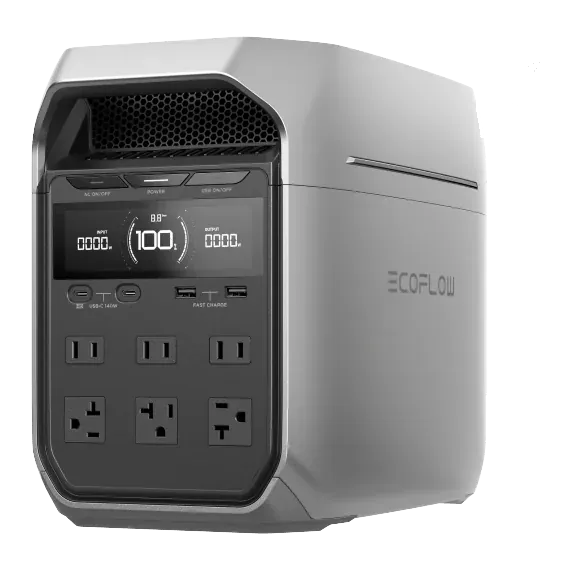
EcoFlow DELTA 3 Plus
1,024 Wh · 1,800 W · $550–$800
We may earn a commission if you buy through these links. It doesn’t change your price. How we make money
Buy the EcoFlow DELTA 3 if…
You charge mostly from a wall outlet and want the same runtime for less money. You own 500 W of solar panels or less, so a second input would sit unused. Your laptop charges at 100 W or less, which covers most 13 and 14 inch models.
Buy the EcoFlow DELTA 3 Plus if…
You run 600 W to 1,000 W of solar panels and want to refill in as few sun hours as possible. You charge a 16-inch laptop that ships with a 140 W charger. You live in a van or RV and want three 12V DC outputs for a cooler, fans or lights.
Specs side by side
The better number in each row is highlighted.
| Spec | EcoFlow DELTA 3 | EcoFlow DELTA 3 Plus |
|---|---|---|
| Capacity | 1,024 Wh | 1,024 Wh |
| AC output (continuous) | 1,800 W | 1,800 W |
| Surge | 3,600 W | 3,600 W |
| Boost mode (heaters, kettles) | 2,200 W | 2,200 W |
| Battery type | LiFePO4 | LiFePO4 |
| Cycle life (rated) | 4,000 (to 80%) | 4,000 (to 80%) |
| Weight | 27.6 lb | 27.6 lb |
| Wall charge time | 56 min (0–100%; about 80% in 30 min) | 56 min (0–100%; about 80% in 30–40 min) |
| Max solar input | 500 W | 1,000 W (better) |
| AC outlets | 6 | 6 |
| USB-C ports (max) | 2 (100 W) | 2 (140 W) (better) |
| USB-A ports | 2 | 2 |
| 12V / car port | Yes (2 DC ports) | Yes (3 DC ports) |
| Expandable | Yes, up to 5,000 Wh | Yes, up to 5,000 Wh |
| UPS switch-over | 10 ms | 10 ms |
| App control | Yes | Yes |
| Size | 15.7 x 8.0 x 11.2 in | 15.7 x 8.0 x 11.2 in |
| Released | 2024 | 2024 |
| Typical price | $500–$700 (better) | $550–$800 |
Runtime for common devices
On the EcoFlow DELTA 3 (1,024 Wh), runtimes go from about 35 min for a microwave (1000 W) to about 35 hrs for a Wi-Fi router + cable modem, each running by itself.
Swipe sideways to see every device →
| Power station | Full-size refrigerator 150 W running, about 45 W average | CPAP with heated humidifier 34 W average | Wi-Fi router + cable modem 25 W average | Laptop (13-16 in) 65 W running, about 39 W average | Microwave (1000 W) 1,500 W average |
|---|---|---|---|---|---|
| EcoFlow DELTA 3 1,024 Wh | 19 hrs | 26 hrs | 35 hrs | 22 hrs | 35 min |
| EcoFlow DELTA 3 Plus 1,024 Wh | 19 hrs | 26 hrs | 35 hrs | 22 hrs | 35 min |
Estimates: battery Wh × 0.85 ÷ the device’s average draw. Real runtime depends on temperature, battery age and how hard the device works.
See how every power station on this site handles one device:
What do the DELTA 3 and DELTA 3 Plus share?
The core is identical. Both have a 1,024 Wh LiFePO4 battery rated for 4,000 cycles, 1,800 W of continuous output, a 3,600 W surge rating and X-Boost up to 2,200 W for heating appliances. That is why the runtime table above shows the same numbers for both: about 19 hours on a full-size fridge, about 26 hours on a CPAP with a heated humidifier and about 35 hours on a router and modem.
They also share the same 15.7 x 8.0 x 11.2 in case, the same 27.6 lb weight, six AC outlets, a 10 ms UPS switch-over and expansion to 5,000 Wh with DELTA extra batteries. Both refill from a wall outlet in about 56 minutes. Every appliance one can run, the other can run too.
Solar: the main reason to buy the Plus
The DELTA 3 has one solar input rated to 500 W. The Plus has two, each rated to 500 W, for 1,000 W combined. In ideal sun with enough panels, that is roughly two hours to refill the DELTA 3 against roughly one hour for the Plus. Real panels produce less than their rating, so both take longer in practice, but the Plus can take in about twice as much power per sunny hour.
That matters in a long outage. A full-size fridge uses about 1,100 Wh a day. With 1,000 W of panels on the Plus, a few good hours of sun can put most of that back. With the DELTA 3 capped at 500 W, you need about twice the sun hours.
If you only own one 200 W or 400 W panel, the caps never come into play and the two units charge from it at the same speed.
Ports and value
The Plus has two USB-C ports at 140 W each and the DELTA 3 two at 100 W. A 13 or 14 inch laptop charges at full speed on either. A 16-inch MacBook Pro ships with a 140 W charger, so it charges faster on the Plus. The Plus also has three 12V DC outputs against two.
Price is the deciding factor. The DELTA 3 usually sells for roughly $500 to $700 and the Plus for roughly $550 to $800. If you would not use 1,000 W of solar or 140 W USB-C, put the savings toward a solar panel or a future extra battery instead.
Common questions
- Does the DELTA 3 Plus have more capacity than the DELTA 3?
- No. Both have 1,024 Wh and 1,800 W of output, so they run a full-size fridge for about 19 hours and a CPAP with a heated humidifier for about 26 hours. The extra cost of the Plus buys solar input and USB-C speed.
- Can both be expanded?
- Yes. Both expand to 5,000 Wh with EcoFlow's DELTA extra batteries. At 5,000 Wh, a full-size fridge would run for about four days.
- How much faster does the Plus charge from solar?
- Up to twice as fast, if you have the panels. The Plus takes up to 1,000 W across two inputs and the DELTA 3 up to 500 W on one. With 500 W of panels or less, they charge at the same speed.
- Which is better for a CPAP?
- They are equal. Both give roughly three 8-hour nights with a heated humidifier at about 34 W, or about 15 nights without it at about 7 W. Both switch to battery in 10 ms if the power drops while you sleep.
Full specs and buying guides
More comparisons
- EcoFlow DELTA 3 Plus vs Jackery Explorer 1000 v2: which should you buy?
- EcoFlow DELTA 3 Plus vs Anker SOLIX C1000 Gen 2: which should you buy?
- BLUETTI Elite 100 V2 vs EcoFlow DELTA 3 Plus: which should you buy?
- DJI Power 1000 V2 vs EcoFlow DELTA 3 Plus: which should you buy?
- Goal Zero Yeti 1000 (6th Gen) vs EcoFlow DELTA 3 Plus: which should you buy?