Yes. A standard e-bike charger draws about 110 W, which any station can handle, and a 1,000 Wh power station holds about 1 full charge for a typical 500 to 700 Wh bike battery.
A standard e-bike charger is a small brick that feeds the pack about 2 amps at 54.6 V, or roughly 110 W. It does not pull that the whole time, so we average it at about 88 W, 80% of the peak. There is no start-up surge. The number that matters more is the bike battery: a typical pack holds 500 to 700 Wh, and filling it takes about 600 to 800 Wh from the station. To find your own pack's size, multiply the volts by the amp-hours printed on it.
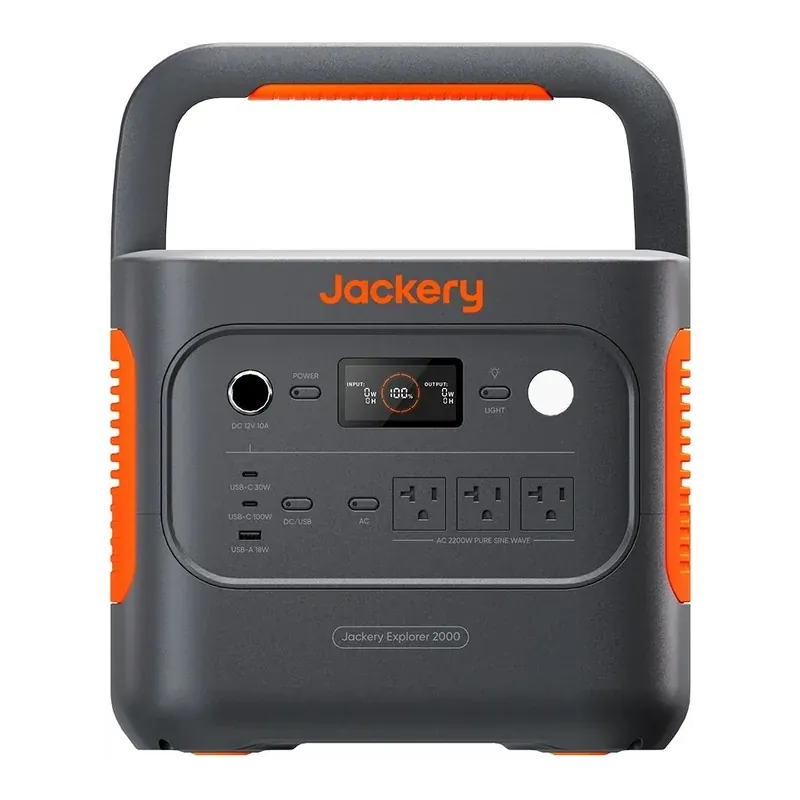
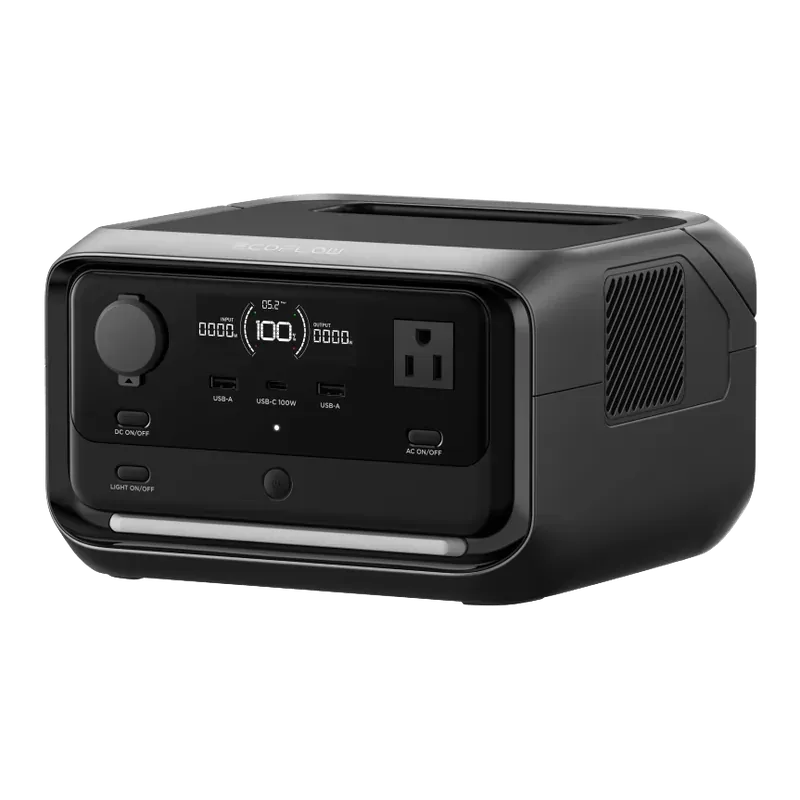
Every station in our table can run a standard charger, since 110 W is far below even the 300 W limit of the Jackery Explorer 300 v2. So the question is how many charges you get. After inverter losses, a 1,000 Wh unit has about 850 to 910 Wh to give, which is about 1 full charge with a little left over. A 2,000 Wh unit gives about 2 full charges and the 3,072 Wh Jackery HomePower 3000 about 3 to 4. A 286 or 288 Wh unit covers only about a third of a charge, and the 499 Wh Yeti 500 about half to two thirds.
A fast charger mainly changes the speed, since the pack still needs about the same energy. At about 275 W it fits every station, but it nearly maxes out the 300 W Explorer 300 v2, so run nothing else from that one while it charges. A small station works as a top-up on a trip, not as a way to refill a big pack every day. If you ride daily through a long outage, plan on a 2,000 Wh unit or solar panels to refill the station between rides.
How long does each power station run an e-bike charger?
At about 88 W on average, an e-bike charger runs for about 3 hrs on the 286 Wh EcoFlow RIVER 3 Plus, about 9.5 hrs to 10 hrs on a 1,000 Wh-class unit (998–1,070 Wh) and about 40 hrs on the 4,096 Wh EcoFlow DELTA Pro 3.
Hours an e-bike charger runs on each power station, from a full charge with nothing else plugged in (15% inverter loss). Sorted by battery size.
Swipe sideways for battery size, output and price →
Hours an e-bike charger runs on each power station, from a full charge with nothing else plugged in (15% inverter loss). Sorted by battery size.
Estimate: battery Wh × 0.85 ÷ 88 W average (110 W × 0.8 duty). Your model may draw more or less; check its label. Prices are typical ranges we checked by hand on October 9, 2026, not live prices.
Where these numbers come from
Standard e-bike chargers put out about 54.6 V at 2 amps (around 110 W), and fast chargers can draw about 275 W. A typical 500 to 700 Wh bike battery needs roughly 600 to 800 Wh from the station.
We do not test units ourselves. Picks come from the official spec sheets and manuals, the watt-hour math on this site, and prices we check by hand. How we pick
Why it won: About a third of a charge, so it suits a top-up, not a full refill. At 10.4 lb it carries one-handed, and an extra battery takes it to 858 Wh, about one charge of a 500 Wh pack.
Light enough to carry one-handed at 10.4 lb
Refills from a wall outlet in about an hour
10 ms UPS switch-over keeps a router, modem or CPAP running through a flicker
Snap on an EB300 or EB600 extra battery to reach 858 Wh
286 Wh only runs small loads for a few hours
600 W limit rules out most kitchen appliances and space heaters
• Use the standard 2 A charger on small stations. It draws about 110 W, against about 275 W for a fast charger, which leaves room for other loads.
• Size your pack before you buy. Volts times amp-hours gives watt-hours, and the station spends about 15 to 20% more than that to fill it.
• Count the bike in your outage plan. One full charge uses most of a 1,000 Wh unit that could otherwise keep a fridge cold for about 19 to 20 hours.
• Refill the station from solar between rides if you ride every day. A 1,000 Wh unit holds about one charge, so it needs topping up before the next one.
• Plug the charger straight into the station's AC outlet, not into a power strip, and keep both the charger and the station dry.
Add the rest of your devices
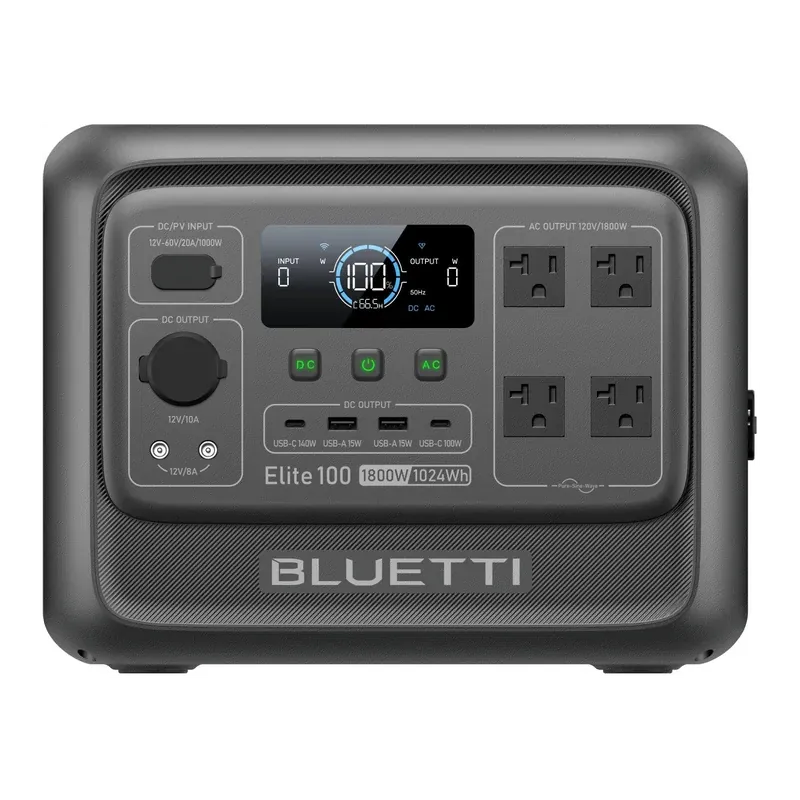
Yes, it can run this, about 10 hrs for an e-bike charger on the BLUETTI Elite 100 V2.
How many times can a power station charge an e-bike?
About once on a 1,000 Wh unit, about twice on a 2,000 Wh unit, and about 4 to 5 times on the 4,096 Wh EcoFlow DELTA Pro 3. That assumes a 500 to 700 Wh bike battery that needs about 600 to 800 Wh from the station.
Can a 300 Wh power station charge an e-bike?
Yes, but only partly. A 110 W charger fits easily, and a 286 or 288 Wh unit adds about a third of a full charge before it runs flat.
Can a power station run an e-bike fast charger?
Yes. A fast charger draws about 275 W, which fits every unit in our table. On the 300 W Jackery Explorer 300 v2 it leaves almost no headroom, so unplug everything else.
How long will a 1,000 Wh power station run an e-bike charger?
The charger alone could run about 9.5 to 10 hours at its 88 W average. A 500 to 700 Wh pack is full well before that, after using about 600 to 800 Wh.
How much power does it take to charge an e-bike?
About 600 to 800 Wh from the station for a typical 500 to 700 Wh pack. A smaller pack needs less, so check the volts and amp-hours on yours.