
Goal Zero Yeti 500 vs EcoFlow RIVER 3 Plus: which should you buy?
The short verdict
The EcoFlow RIVER 3 Plus is the better pick for most people. It puts out 600 W against the Yeti's 500 W, handles a 1,200 W surge against 1,000 W, lists a 10 ms UPS switch-over, and weighs 10.4 lb instead of 16.1 lb. It also usually sells for roughly $180 to $300, while the Goal Zero Yeti 500 usually sells for roughly $340 to $500.
The Goal Zero Yeti 500 wins on battery. It holds 499 Wh against 286 Wh, about 75% more, so it runs a full-size fridge for about 9.5 hours instead of 5.5 and a CPAP with a heated humidifier for about 12 hours instead of 7. It also has three USB-C ports to the RIVER's one and a 4,000-cycle rating against 3,000.
The tie-breaker is how much runtime you need from a single box. If about 5.5 hours of fridge time is enough, or you may add capacity later, the RIVER 3 Plus can grow to 858 Wh with an extra battery. The Yeti 500 cannot be expanded. Both can run the same devices in our list, so the choice comes down to hours, weight and price, not to what each one can start.
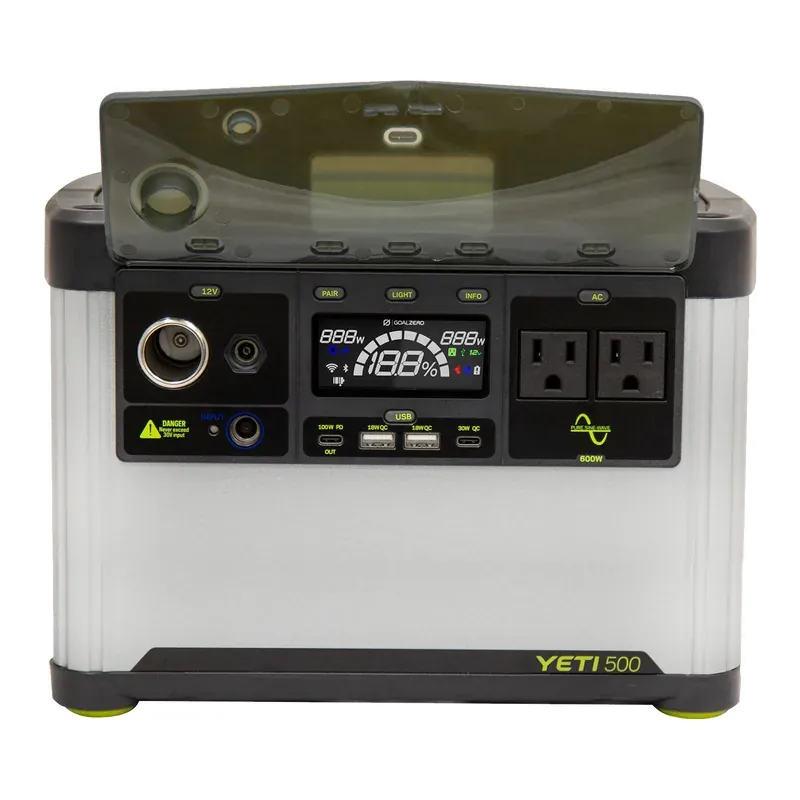
Goal Zero Yeti 500
499 Wh · 500 W · $340–$500
We may earn a commission if you buy through these links. It doesn’t change your price. How we make money
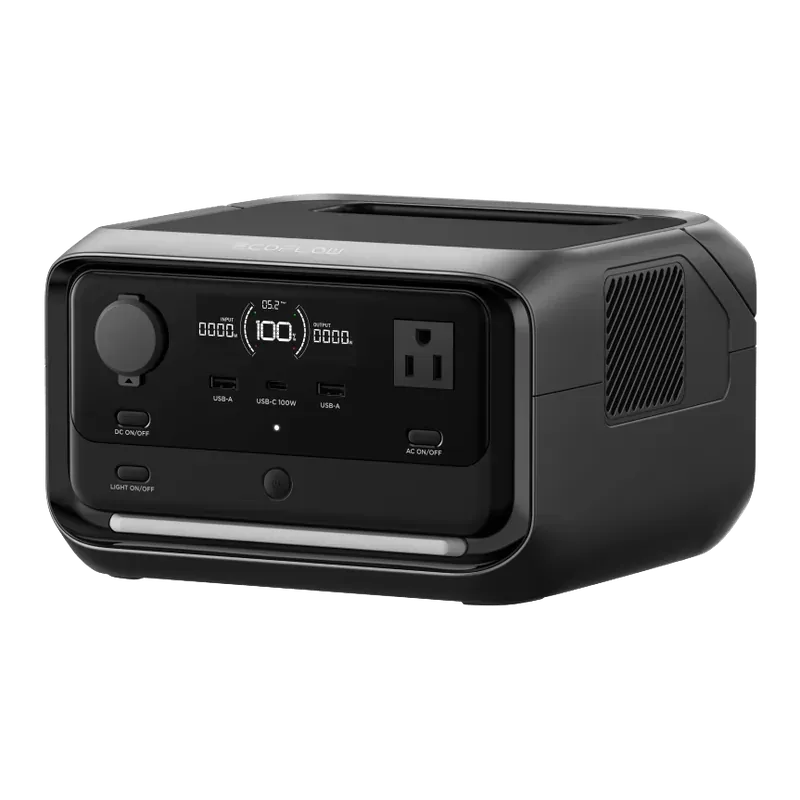
EcoFlow RIVER 3 Plus
286 Wh · 600 W · $180–$300
We may earn a commission if you buy through these links. It doesn’t change your price. How we make money
Buy the Goal Zero Yeti 500 if…
You want the most runtime from one small box and do not plan to add batteries. That means about 9.5 hours on a full-size fridge or about 12 hours on a CPAP with a heated humidifier. It also suits you if you charge a lot of gear over USB-C, since it has three ports.
Buy the EcoFlow RIVER 3 Plus if…
You want a lighter, cheaper unit with a rated 10 ms UPS switch-over for a router, modem or CPAP, and you may want more capacity later. It also fits if you need a little more headroom, with 600 W of output and a 1,200 W surge, and a third AC outlet.
Specs side by side
The better number in each row is highlighted.
| Spec | Goal Zero Yeti 500 | EcoFlow RIVER 3 Plus |
|---|---|---|
| Capacity | 499 Wh (better) | 286 Wh |
| AC output (continuous) | 500 W | 600 W (better) |
| Surge | 1,000 W | 1,200 W (better) |
| Boost mode (heaters, kettles) | None | 1,200 W |
| Battery type | LiFePO4 | LiFePO4 |
| Cycle life (rated) | 4,000 (to 80%) (better) | 3,000 (to 80%) |
| Weight | 16.1 lb | 10.4 lb (better) |
| Wall charge time | 1 h 30 min (in High input mode; ships in slower Low mode) | 1 h (0–100% from a wall outlet) (better) |
| Max solar input | 200 W | 220 W (better) |
| AC outlets | 2 | 3 (better) |
| USB-C ports (max) | 3 (100 W) | 1 (100 W) |
| USB-A ports | 2 | 2 |
| 12V / car port | Yes (2 DC ports) | Yes (1 DC ports) |
| Expandable | No | Yes, up to 858 Wh |
| UPS switch-over | No UPS mode | 10 ms (better) |
| App control | Yes | Yes |
| Size | 11.32 x 7.82 x 7.8 in | 9.2 x 9.1 x 5.8 in |
| Released | 2024 | 2025 |
| Typical price | $340–$500 | $180–$300 (better) |
Runtime for common devices
On the Goal Zero Yeti 500 (499 Wh), runtimes go from about 4.5 hrs for a 55-inch LED TV to about 17 hrs for a Wi-Fi router + cable modem, each running by itself.
Swipe sideways to see every device →
| Power station | Full-size refrigerator 150 W running, about 45 W average | CPAP with heated humidifier 34 W average | Chest freezer (7 cu ft) 80 W running, about 26 W average | Wi-Fi router + cable modem 25 W average | 55-inch LED TV 90 W average |
|---|---|---|---|---|---|
| Goal Zero Yeti 500 499 Wh | 9.5 hrs | 12 hrs | 16 hrs | 17 hrs | 4.5 hrs |
| EcoFlow RIVER 3 Plus 286 Wh | 5.5 hrs | 7 hrs | 9 hrs | 9.5 hrs | 2.5 hrs |
Estimates: battery Wh × 0.85 ÷ the device’s average draw. Real runtime depends on temperature, battery age and how hard the device works.
See how every power station on this site handles one device:
More battery against less weight
The Yeti 500 holds 499 Wh and the RIVER 3 Plus holds 286 Wh, so the Yeti has about 75% more energy. That shows up in every row of the runtime table. A full-size fridge runs about 9.5 hours on the Yeti and about 5.5 on the RIVER. A chest freezer runs about 16 hours against 9, and a router and cable modem about 17 hours against 9.5.
A 55-inch LED TV runs about 4.5 hours on the Yeti and about 2.5 on the RIVER. A CPAP with a heated humidifier runs about 12 hours on the Yeti, which covers one 8-hour night. The RIVER manages about 7 hours, just short of one night. A power station is a short bridge for a CPAP, never your only backup, so ask your equipment supplier about an outage plan.
The price of that extra battery is weight. The Yeti 500 weighs 16.1 lb and the RIVER 3 Plus weighs 10.4 lb, about 6 lb less. Per pound the Yeti still carries more energy, about 31 Wh against 27 to 28 Wh. If you carry the unit often, the RIVER is the easier one to lift.
Output, UPS and what each one can start
The RIVER 3 Plus has more headroom. It delivers 600 W continuously with a 1,200 W surge, and the Yeti 500 delivers 500 W with a 1,000 W surge. A full-size fridge needs about 1,000 W for a moment to start its compressor. That sits right at the Yeti's surge limit, and both units can run it. Neither can run a coffee maker or a multicooker, which need about 1,000 W.
Among the five devices in the table, nothing runs on one unit and not the other. The RIVER has an X-Boost mode rated up to 1,200 W for simple heating devices, but it does not count as continuous output, so check the manual before you rely on it. The extra 100 W mostly buys margin when you plug in several things at once.
The RIVER lists a 10 ms UPS switch-over, which is meant to keep a router, modem or CPAP running through a flicker. The Yeti 500 lists no rated switch-over time, so do not count on it as a UPS. The RIVER also has three AC outlets to the Yeti's two.
Recharging, solar and expansion
The RIVER 3 Plus refills from a wall outlet in about 1 hour. The Yeti 500 takes about 1 hour 30 minutes, but only in High input mode. It ships in a slower Low mode, so check the setting before you count on the faster time. Solar input is close, at 200 W for the Yeti and 220 W for the RIVER.
Expansion is where the RIVER pulls ahead. An EcoFlow extra battery takes it to 858 Wh, which is more than the Yeti's 499 Wh, though you carry the extra battery too. The Yeti 500 stays at 499 Wh. If you might outgrow a small unit, the RIVER gives you a way to grow without buying a second station.
Ports, battery life and value
The Yeti 500 has three USB-C ports and the RIVER 3 Plus has one, and both are rated up to 100 W. If you charge two laptops and a phone from one box, the Yeti saves you adapters. Both have a 12V car port. Both use LiFePO4 cells, rated for 4,000 cycles on the Yeti and 3,000 on the RIVER.
The price ranges barely overlap. The Yeti usually sells for roughly $340 to $500 and the RIVER for roughly $180 to $300. You pay for the extra battery with the Yeti, and for a smaller battery with a lower price, a lighter box and more features with the RIVER.
Common questions
- Can the Goal Zero Yeti 500 run a refrigerator?
- Yes. A full-size fridge needs about 1,000 W to start, which is right at the Yeti's 1,000 W surge limit, and it runs the fridge for about 9.5 hours. The RIVER 3 Plus can also run it, for about 5.5 hours.
- Which is lighter, the Yeti 500 or the RIVER 3 Plus?
- The RIVER 3 Plus, at 10.4 lb against 16.1 lb. That is about 6 lb less, with about 40% less battery.
- Can I add a battery to either one?
- Only to the RIVER 3 Plus. An EB300 or EB600 extra battery takes it to 858 Wh. The Yeti 500 cannot be expanded and stays at 499 Wh.
- How fast does the Yeti 500 recharge from the wall?
- About 1 hour 30 minutes in High input mode. It ships in a slower Low mode, so switch it before you count on that time. The RIVER 3 Plus takes about 1 hour.
- How many hours will each one run a CPAP?
- With a heated humidifier, about 12 hours on the Yeti 500 and about 7 hours on the RIVER 3 Plus. Treat either as a short bridge, never your only backup, and talk to your equipment supplier about an outage plan.