
Can the Goal Zero Yeti 1000 (6th Gen) run a CPAP (no humidifier)?
Yes. The Goal Zero Yeti 1000 (6th Gen) runs a CPAP without a humidifier for about 15 nights (121 hours) from a full charge. At about 7 W on average it uses 0.8% of the battery an hour, and the 2,000 W output is far more than it needs.
Add your other devices to the Goal Zero Yeti 1000 (6th Gen) in the calculatorKey numbers
- Nights per charge
- 15 nights
- 5 days
- Battery used per hour
- 0.8%
- at 7 W average
CPAP (no humidifier)
- Running
- 7 W
- 5–15 W range
- Start-up
- 10 W
- Average
- 7 W
- runs all the time
Goal Zero Yeti 1000 (6th Gen)
- Battery
- 998 Wh
- about 848 Wh usable
- Output
- 2,000 W
- continuous
- Surge
- 3,600 W
- start-up peak
How we worked it out: 998 Wh × 0.85 ÷ 7 W = about 5 days (8 hours a night). The 0.85 covers inverter and battery losses. We do not test units ourselves; the numbers come from the official spec sheets and typical device draws. How we pick
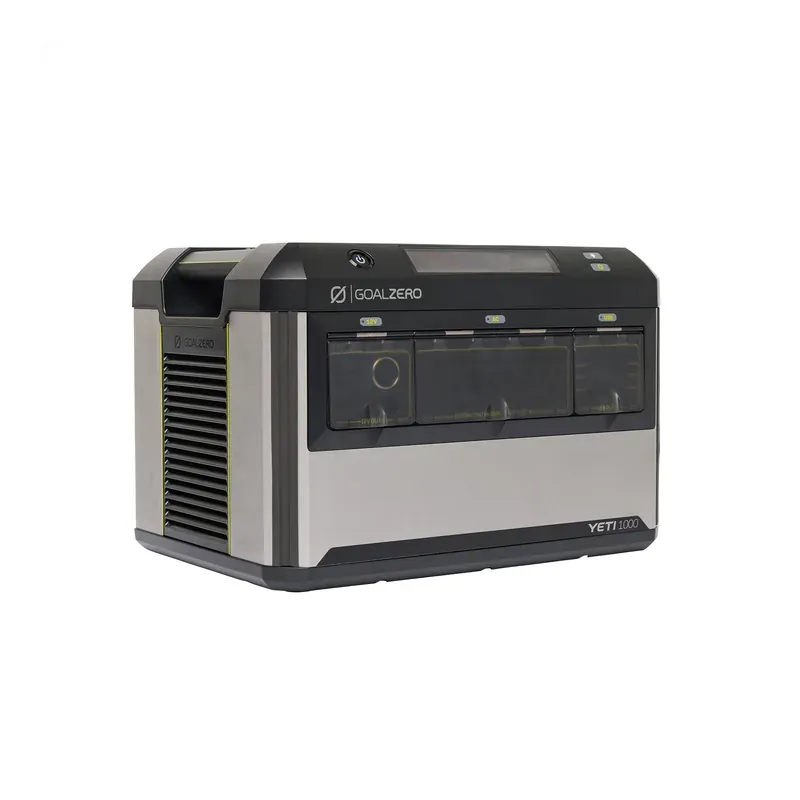
Goal Zero Yeti 1000 (6th Gen)
998 Wh · 2,000 W output · 3,600 W surge · 35.3 lb
Full specs and runtimes for the Goal Zero Yeti 1000 (6th Gen)We may earn a commission if you buy through these links. It doesn’t change your price. How we make money
What else the Goal Zero Yeti 1000 (6th Gen) runs
One device at a time, from a full charge.
Other power stations for a CPAP without a humidifier
The nearest sizes that also run it.
Keep going
- Can a power station run a CPAP without a humidifier? Every unit compared
- Goal Zero Yeti 1000 (6th Gen): specs and runtime for common devices
- Calculator with a CPAP without a humidifier on the Goal Zero Yeti 1000 (6th Gen)
Real runtime depends on the model you own, room temperature and battery age. The 5 days above is an estimate, not a measured result.
Common questions
- How many nights will the Goal Zero Yeti 1000 (6th Gen) run a CPAP without a humidifier?
- About 15 nights of 8 hours (121 hours in total). A CPAP without a humidifier averages about 7 W, and the 998 Wh battery gives about 848 Wh after inverter losses.
- How long does it last with a heated humidifier?
- With the heated humidifier on (about 34 W), about 3 nights (25 hrs). Without it (about 7 W), about 15 nights (5 days). Turning the humidifier off is the easiest way to stretch a charge.
- Is the Goal Zero Yeti 1000 (6th Gen) enough backup for a CPAP without a humidifier?
- Only as a short bridge. It covers about 15 nights (121 hours) from a full charge. A power station should never be your only backup for medical equipment: ask your equipment supplier what they provide in an outage, register with your utility’s medical-needs program, and keep the settings your prescriber gave you.